Best Laid Plans: Black Women in the Marvel Cinematic Universe

marvel-140523

BY SHANNA BOWIE

Disclaimer: Since I was asked to write about pop culture from a feminist perspective, I want to make a few things clear. First, as a Black woman, my feminism stems from a place of intersectionality and centering Black women in discussions of feminism. If you’re looking for your hundredth “Why Doesn’t Black Widow Have A Solo Film?” article, you won’t find it here. Secondly, I am a professional fangirl. I don’t write about stuff I don’t like and if I critique something, it’s because I genuinely love it and I want it to be even better. I’m probably not going to call for a boycott of Doctor Who because Moffatt sucks (even though he does) but I will call something I love problematic if it is. In fact, that’s just what I’m about to do.


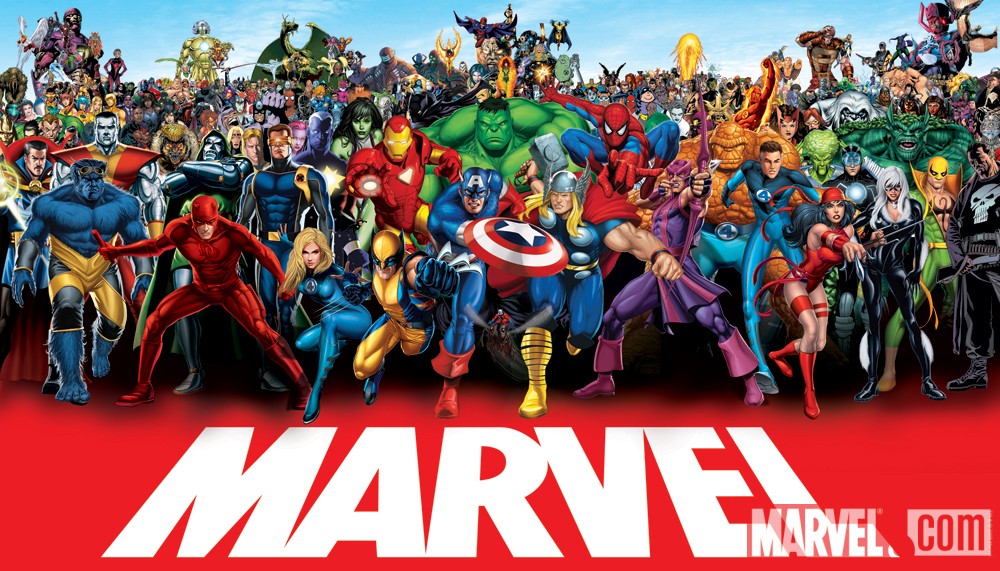
A recent back and forth on Facebook caused me to do some deeper thinking about representation in the Marvel Cinematic Universe. The MCU has been touted for its inclusion and diversity since it began. The MCU is based largely on the Marvel comics Ultimate universe reboot which started with the introduction of Miles Morales by Brian Michael Bendis. Subsequently, in 2008 the MCU started out with a concerted effort towards showcasing diversity and strong women. Samuel L. Jackson was cast as Nick Fury, whom the Ultimate’s artists had based their comic book version on. And Terrance Howard was featured as James Rhodes in the first Iron Man film.

Women were also given more prominent coverage like Pepper Potts, who was moved out of the mere love interest/sidekick role and molded into a businesswoman and equal partner for Tony Stark. As the MCU has grown, we’ve seen the addition of even more Black men; Idris Elba as Heimdall in Thor 1 & 2, Anthony Mackie as Falcon in Captain America: Winter Soldier, Avengers 2 and now the upcoming Ant-Man, and even a solo film for Black Panther slated to open in 2017. And women have been kicking ass and taking names all over the MCU; Agent Carter, Black Widow, Jane Foster, Lady Sif, more than half the cast of Agents of S.H.I.E.L.D. Marvel’s universe has expanded beyond anyone’s wildest imagination but this did not spring forth without careful planning and thought. So my question is: with all this thoughtful planning, did anyone think to include Black women in the MCU?

Just to note again, I am a huge fan of the MCU (read my disclaimer again before you call me a hater) but this is a real question. It seems like there was a real concerted effort to include Black people (read: Black men) and strong women (read: strong White women) into the MCU and basically, everyone thought they’d covered their bases. Pats on the back, golf claps, we did it! We solved the diversity issue in comic book films! And now it feels like if you call out this glaring oversight, here come the excuses. “We just got Black Panther, why can’t you be patient?” “But Warner Bros. has all the mutants and the only good sistas in the comics are mutants” “You guys got Zoe Saldana in Guardians. Isn’t that something?”

The answers to your questions are: “I’m tired of waiting” “Misty Knight and Monica Rambeau” and “Zoe was an alien not a Black woman”. I’m not even saying that Marvel needs to add a Black woman in a solo film to prove their commitment to diversity, what I’m saying is, has anyone examined the fact that this was a carefully laid plan that started pre-2008, spans 12 films, 3 television shows, is filled with Easter eggs and references to characters seen and unseen and none of Marvel’s Black women characters have been included even tangentially. I don’t think it’s malicious, I think it shows how we are not even included in the thought process. I don’t think some exec stood in a meeting and vetoed every Black female character that was pitched, I think we honestly never crossed their minds.

Now I can sit here and tell you anecdotes about all the Black women I know who frequent shops or Comixology or what have you to prove our buying power and why we should be included, but honestly, that’s not why we should be included. We should be included because the invisibility of Black women in the MCU mirrors the invisibility we feel in the real world every day. Just like the Black women who marched for Trayvon Martin, we criticized and pushed with Black men for Black Panther. Just like the Black women who burned their bras in solidarity, we lobbied for Black Widow to have a prominent role in Avengers. So when can we finally speak truth to power and acknowledge that we have been erased in this universe, both on-screen and off. When can we ask to be seen? Or can we admit, this plan wasn’t made for us.

The Mysoginoir of Burning Down Black Churches

four young girls
 by chrislande dorcilus

It is no coincidence that seven of the nine victims of Dylan Roof’s violent and racist attack on the Emanuel African Methodist Episcopal (AME) Church were black women.  Approximately 62% of black women in America consider themselves part of the Black Christian family. Every Sunday black women (even more so than black men) fill the pews of historically black churches–upholding a tradition as old as the American South itself; older even than the confederate flag.They congregate to worship, socialize, and do the much needed community outreach and political organizing that supports black American families. This group of devoted American congregants includes all three of my sisters, my devout grandmother, my best friend’s mother, and most of the women that make up the colorful patchwork of my life.

When I first moved to Brooklyn I lived with my aunt. Her apartment sat atop the church where she worshiped every Sunday. On Sundays she could be found catering meals for church events, or helping to manage the church’s budget, while taking expert care of the aging founder. My aunt is not a special case, black women around me cover and protect the black church from coast to coast. Though Brooklyn – the most diverse borough in the melting pot of NYC- is considered less likely to breed racial intolerance than a “Dixie State” like South Carolina,  I’ve seen MTA workers flying confederate colors. I’ve heard the whispers of racist ideology in the curt speech of women on the train. I can imagine the grief that has invaded the neighborhoods of the women I love as this wave of church burning engulfs them.

Dylan Roof wrote in his manifesto that the attack on Emmanuel AME was partly about rebuilding the purity of white women. Black women were once again paying for white purity with their lives–and this glaring gendered aspect of the crime washed over our nation. This is not to say that the lives of Rev. Clementa Pinkney and Tywanza Sanders matter less. This is not about pitting black men against black women. We need to admit to the truth of American life: black women’s lives matter less than everyone else’s. Take breast cancer for example, how is it that even though black women are less likely to develop it, we are more likely to die from it?  The simple answer is that the larger American community is not listening to our needs and not tuning in to our pain. As a black woman and a feminist, It’s painful to watch this “less than” rhetoric play out over and over again. I see the lives of the great women murdered at Emmanuel AME as my own. They stand as a mirror of who my friends and sisters could be.

Let’s remember Rev. Sharonda Singleton, a pastor, speech therapist, and high school girls’ track coach, and the woman who raised her teenage son to have compassion for her murderer. Let’s remember Rev. Depayne Middleton Doctor, the reverend and mother of four, who spent her time as a community director. These women were much more than the congregants of a megachurch. These women carved out niches of power for themselves and the women in their community within a historically misogynist faith, one where black female reverends still receive death threats.

It’s with bitter disdain that black feminists and womanists in America, such as myself, watch as black women are murdered for exercising the same religious liberty afforded to the racist conservative pundits and militarized groups that disseminate hate in American communities. It’s with mind numbing tears that we watch as feminist media channels ignore our deaths at the hands of white people. But what really drives the pain home is how much we are continuously being used. When liberal politicians need the black vote, they know where to find it and rouse the black church. Yet, they are very silent as those same churches are hollowed out with the fire of Bible Belt racism.

The destruction of black churches as overtly racist forms of terrorism and gendered violence has occurred throughout  America’s history. The truth is that any violent assault on the black church is a violent assault on more than half of our country’s black women. Jia Tolentino over at Jezebel points out that besides the 8 that are being whispered about in the news, “29 other black churches have burned within the last 18 months.”  We have yet to completely account for the countless others that were silently burned down in the years when commentary on the tragic state of race relations in America didn’t drive traffic to internet websites, news channels, and blogs. We know of white racists burning down churches and killing little girls, but we categorize those acts as dust left to settle in the past. America thrives on the silence which surrounds violence against black women. This silence is the same one that enables google to tag a young black girl as a gorrilla in an image, allows an Ohio police officer to break the jaw of a 12 year old black girl at a pool party, and perpetuates the most dangerous myth swirling in white America’s imagination: that black people feel less pain.

The truth is this: in 1963 four little girls were killed in the Birmingham church bombings, and 52 years later, in 2015, seven black women were murdered in a bible study group. Cynthia Hurd, the public librarian who was also killed at Emmanuel AME, was two years old in 1963. I can imagine her parents had cradled her in their arms, and thanked god for the blessing of having their own daughter safe in their home while vigilantly watching their television screens. I can see them  bravely breaching the collection plates of their own church to donate to the women that had lost their little girls to senseless white violence. I can only imagine.

In 2015, the death tolls aren’t decreasing. Misogynoir festers underneath the American psyche. Black women are routinely seen as violent by even other marginalized groups in our society. This makes it easy to denounce the mass violence that is enacted against us at both systematic and personal levels. Just as the death of Rekia Boyd, or the assault on Dymond Milborn, a twelve year old black girl who was beaten and kidnapped by police in front of her home, went unnoticed, so has the mass sterilizations, and the church burnings been ignored for what they are: violence against black women.

The Dauntless Duchess : Mandy L. Rose

MandyRoseHeadshot
Mandy L. Rose  studied creative writing at Colorado State University. She is always adopting new literary mothers and lives in Colorado with her two young children. Her poetry and prose have appeared in Pithead Chapel and in the anthology, A Poetic Inventory of Rocky Mountain National Park. She has poetry forthcoming in the protest journal Thank You for Swallowing.

Who is your favorite female identifying written character and why?

I find it impossible to choose one favorite. While there are so many characters I love and admire as an adult, I spent my childhood with Ramona Quimby, Nancy Drew, Laura Ingalls, Jo March, Charlotte the Spider, Trixie Belden, Mary Lennox, Matilda, Francie Nolan, and Scout Finch, to name a few. Through them, I imagined myself brave, resourceful, articulate, defiant, even disobedient. The disobedience was especially important, because in real life, I was, and perhaps still am, too well-behaved. They showed me that being a girl was more than just a dress and a set of expectations imposed by others.

It was easier to embrace my tendency to carry around a notebook and give myself permission to fill it, because I grew up reading girls who were defiant and outspoken, even when I wasn’t. When life was tough, they were tougher, and I wanted that strength as my own.

They are also characters I have made a point to introduce my children to–my son, as well as my daughter, because I believe they both need to read books by and about ladies with moxie.

What  literary work by a female identifying writer had the most effect on you as a writer and/or person?

I bought a copy of Emily Dickinson’s collected poems from a rummage sale when I was eight or nine. I remember opening the book to the words, “Have you got a brook in your little heart,” and thought YES. I had to have it. I had no idea at the time what a wellspring would be opened. I fell in love with her irreverent use of punctuation, sound, and condensed language.

I have studied Emily more intensely since then, including her letters, and consider her a literary mother, the first of several. While I would never compare myself to her, it is easy to see her influence in my poetry. She is a touchstone for me, a source of comfort and inspiration. As a woman, I am fascinated by her quiet ferocity and often find myself referring to her as many would a friend. This is not to say that I talk to Emily, but I do believe that some of my best poems find themselves in conversation with hers. You could say they are of a kind.

She is also an important voice in my manuscript, Frost-Heave, and I named my daughter after her, making her present in daily life. She once wrote of a heart so heavy, her arms felt burdened by its weight. In this, too, I feel a familiarity.

How did your essay Five come about?

The complexity of familial abuse makes you find ways to love those who have hurt you. You could say I wrote this essay because sometimes I still need to love my mother, even though that love is complicated. The opening line repeated in my head numerous times, as if an incantation, before I took pen to paper. I have in my possession a series of photographs I can neither bring myself to display nor discard, and the piece came about because of their connection to each other.

My mom once pointed to the photo with the daisy dress and said it was the last time she was innocent. My ex-husband once showed me the picture of himself at five and said, “this is right before my mom left.” For my daughter, time is still sometimes measured in terms of “before daddy hurt me” and “after my daddy hurt me,” and the photos from that time make the same distinction.

We don’t always have more than a mental image of our “before” moments, but it is impossible for me to look at any of these photographs without loving and grieving for each of them a loss of innocence that cannot be restored. This kind of repeated familial fracture is something I have thought about a lot. Much of what I write is about the cycles of familial violence, often trying to write toward an understanding and peace I don’t yet feel. How did this happen? Why did it repeat? How can I make sure it stops here? What could I have done differently? Underlying all of that, a desire to replace anger with an emotion I can live with. I am trying to write a world I can live in.

Put another way, Dan Beachy-Quick once told me, “what you put into the poem, you protect. “I am still trying to protect these children.

When I think of my mother and ex-husband as they were at five, I remember they were once innocent and then wounded. When I think of my daughter at five, I am trying to forgive myself for letting her go that day. We were all five, once, and I think you can find something to love about anyone if you make them five. My mom died a few years ago and, somehow, thinking of her at five makes it easier to think that she thought of me tenderly when I was five. I know she must have.

What has been your greatest writing life moment so far?

I have had the opportunity to read my work in a variety of settings, but reading at The Tattered Cover, a beloved Denver bookstore, was a milestone moment. As a girl, I used to make space on a shelf, pretending I would one day write a book that would find a home there. A few years ago, I helped curate and edit an anthology, A Poetic Inventory of Rocky Mountain National Park, published by Wolverine Farm Publishing. While National Geographic, the Parks Service, and members of the scientific and local communities gathered to inventory species in the park, over 60 Colorado writers contributed works of poetry and prose, each named after a species in the park. At the Tattered Cover, I spoke about the experience of working on the project and read my poem Rosa woodsii,Woods’ Rose from the anthology. It was wonderful to see our project on the shelves and to participate in such a wonderful collaboration.

What is your favorite piece by another writer from Issue One?

How We Roll, by Rebecca Golden. The absurdity of dating, funerals, and family feuds told through irreverent, rapid-fire humor was perfectly captured. Hilarious lines about things like a hearse needing a jumpstart are woven into a piece that also puts a spotlight on the messes of love, grief, relationships, and otherness. I’ve read some of Rebecca’s writing before, but this made me want even more.

What are you currently working on?

I’m currently submitting my poetry manuscript, Frost-Heave. Separated into seasons, it explores the cycles of familial and relationship violence through the language of wildfire eradication techniques, scarification germination, and through a series of redefined terms–including dissolution. There are other projects, but this one is demanding my attention.

Who/what is your favorite Alice/Alyss?

Alice Notley. Absolutely Alice Notley. She starts the poem, 30th Birthday, with the lines “May I never be afraid/especially of myself.” If I could teach my daughter one thing, that might just be it. I’m trying to learn that lesson. Her writing looks so closely at the self, at consciousness, and there’s a great interview with her in the Boston Review, and I love her statement, “I’m a hugely but quietly disobedient person.” Her work often seems to concern itself with cultural and social disobedience, and if she’s afraid to write anything, I don’t know what that would be.

I love when a writer’s words haunt me, and these of Alice’s from the poem I’m Just Rigid Enough  play in my mind sometimes:

“We name us and then we are lost, tamed

I choose words, more words, to cure the tameness, not the wildness.”


Sailor Jupiter : Chrislande Dorcilus

bio picture

Chrislande Dorcilus is the Sailor Senshi best known as Sailor Jupiter. She lives through cliche. Wants to get a dog to dress up like a baby and doesn’t get poetry. She loves you, and studies Fashion Theory and History at the CUNY Grad Center. Holla.


Who is your favorite female identifying written character and why?

I love difficult women and Emma Bovary is on top of my list of most difficult woman that I have ever read and thus, my “favorite female identifying character.” I love that she searched for what she wanted so hard that it killed her. I love that she was loved right through her selfish and spoiled journey to personal demise. To have a life worth being written about with a modicum of poetic flourish you need to be difficult.

What literary work by a female identifying writer had the most effect on you as a writer and/or person?

Depending on the point in my life this answer certainly changes. Last summer it was Manga-ka Kyoko Okazaki’s Pink. When I was 16, it was Peach Girl by Miwa Ueda. The summer of my 22nd year, I would have growled Toni Morrison’s Beloved at the answer but that following Fall I was smitten by any poem June Jordan wrote. Right now, I am a devotee of French Christian mystic and philosopher Simone Weil. I read her life altering Gravity and Grace for a class I took this semester taught by poet/professor/awesome person Wayne Koestenbaum, and fell in love. Weil’s story is very similar to Emma’s. A genius of a woman, an empath, a goddess in her own philosophical right, and another woman who died trying to be exactly who she wanted to be. I can also say that The Lover by Duras stands out as a novel that always eventually pops up as favorites no matter the time in my life. Ask me again in a year.

How did your poems in Alyss come about?

I want to lie in answering this question.  I want to say that they came from my own brilliant flourishing young writer’s mind, but they were written in conjunction to a poetry class four years ago at Florida State University.

What has been your greatest writing life moment so far?

The thick-German-chocolate-slice-of-cake feeling of having someone like my poetry. I don’t believe that it will get any better than that.

What is your favorite piece by another writer from Issue One and why?

My favorite is Houston’s “Darryl Sleeps Through the Best Sunrise I’ve Ever Seen.I love when a poem invites me to be intimate with the complexity of grief. It was a soft memorial poem, but I could still feel the known sadness of having lived through a loss percolating in the verse. I too have a similar sadness. I also love that it was narrative and full of color. The first stanza connects to both the way I understand the world and how I long to write poetry:

“Lafitte is socked in by orange fog.
Sunrise surrounds us, a pink I can taste,
a someone-call-9-1-1 red:
the sky has cracked open its head and is bleeding.”

I too have been surrounded by “a pink I can taste.”

What are you currently working?

I’m getting Master’s degree in Fashion Studies so, I’m working on making it translate into gainful employment. That requires a skill familiar to all poets: making dollars out of pennies! I am also in the contemplative process of writing the following books: one on Josei manga and American audiences, and another on black women, fashion and the south.

Who/what is your favorite Alice/Alyss?

Alice Walker is my favorite Alice for a trillion of reasons but my two favorites are:

  • Finding Zora Neale Hurston’s grave.
  • And writing “In Search of Our Mother’s Gardens

Her career is proof of the way that genre is a BS construct and that as artists we have to find each other across time and space, and as writers we can and should write what makes us happy.

Disaster : Taylor Sykes

taylor pic

Taylor Sykes attended Purdue University and currently works as a creative writing instructor at Writopia Lab in New York City. Her flash fiction has been read on NPR’s All Things Considered and her fiction and poetry has appeared in journals such as Quail Bell Magazine and Pieces of Cake Magazine.


Who is your favorite female identifying written character and why?

I’m going to go with Villanelle from Jeanette Winterson’s The Passion. Villanelle is unpredictable, contradictory in nature, and feisty as hell. She embraces passion, chaos, and is open to love in all its forms, despite the “sweet and precise” torture it causes. Villanelle is definitely one of the most badass female-identify characters I’ve ever encountered.

What literary work by a female identifying writer had the most effect on you as a writer and/or person?

There’s too many to say! I can’t, I can’t. Okay, I will, I will. The short story “Where Are You Going, Where Have You Been?” by Joyce Carol Oates. This is the short story that made me want to write short stories. There’s so much build-up in such a small space and the ending left me shaken. The subject matter, involving a strong-willed girl in a vulnerable moment, resonated with me. I read “Where Are You Going, Where Have You Been?” at such an early age, probably only 16, that it really impacted the style and subject matter of my future stories. And it’s still one of my favorite stories to re-read and to teach.

How did your story Worse Things come about?

As is the case with most of my fiction, the story started with the character’s very specific voice and a general idea of the setting. I had Prudence yammering away in my head, so much so that voice was overpowering the plot. So I wrote this character into a car and let her describe the small, claustrophobic town. I knew certain things about her backstory, so I wrote the interaction with her cousin next. It felt important to explore the varying experiences of sexual trauma as well as the entirely subjective perspectives on this trauma. So that conversation between the two characters and Prudence’s moment of panic were prominent in my head early on. I wanted Prudence to flee the scene at the very end, that felt authentic to her character, and went in with that goal in mind when I started writing. The first draft was written in three furious days and revised, revised, revised for several weeks before workshopping it at the Tin House Summer Writers Workshop, which was immensely helpful, and after that, I knew what final revisions needed to happen before I could send it out.

What has been your greatest writing life moment so far?

During undergrad, I had the honor of working with Sharon Solwitz. Over three classes and two years’ time, she became my mentor and fiction mother at Purdue. Working with her changed my writing life as well as my, I guess I’ll call it regular life, so I’d say that my first day in her class was my moment.

What is your favorite piece by another writer from Issue One and why?

Both poems by Nazia Jannat. One, I’m a sucker for strong villanelles (“A Palestinian Elegy”). Two, “Self Portrait for Whiskey Kisses” is just so damn smart.

What are you currently working on ?

“Worse Things” is one in a series of linked short stories that I’m working on.

Who/what is your favorite Alice/Alyss?

Oh, this is such a great last question. Alice Ayres, from the play/film Closer.

The Awkward Angler : Lynn Marie Houston

LMH_1394-20med


Lynn Marie Houston’s essays and poems have appeared in South Atlantic Quarterly, Prick of the Spindle, Poydras Review, Boston Literary Magazine, Uppagus, 3Elements Review, Extract(s), Postmodern Culture, and Proteus, among others. She lives in an Airstream camper in her hometown of Newburgh, New York. When she isn’t teaching English,  she tends her honeybees and kayaks the Delaware River.  You can find more of her work at her website: lynnmhouston.wordpress.com


Who is your favorite female identifying written character and why?

The main character in Alice Walker’s “Everyday Use” haunts me. She feels like family, and I don’t only mean that as a compliment. I’m struck by how Walker wrote Mama as so comfortable in her own skin. Mama is not ashamed of her lower socioeconomic status and is proud of her skills and capacity for hard labor. This large, calloused-hand, black female character was written to be so aware of her own beauty and worth, I can’t help but admire her, can’t help but wish (even as a white woman) to occupy in the real world the literary space she does because it resolves something of the conflict that exists for me between class and gender.

And yet, the character in the story with whom I should most identify, the “intellectual” Dee, is the one who is devalued by Mama in the story. While visiting her mother and sister, Dee offers to take home quilts that were made by their ancestors. She wants to hang them on the wall, but her sister Maggie was supposed to get the quilts for “everyday use” after she marries. Mama opts to preserve a living heritage by giving the quilts to Maggie and pokes fun at Dee for being too removed from her roots. How many times have I been Dee, marginalized for my “academic” thinking, and ignored at family gatherings? My parents were both first-generation college students and on my mother’s side we are still very close to our working class roots.

I love Alice Walker’s character Mama in “Everyday Use” because she is content with a simple life that Capitalism tells us is not good enough, and yet I fear Mama is my own grandmother, a factory seamstress married to a coal miner, who wrote me a letter when I was in my PhD. program at Arizona State telling me to quit wasting my time at school and find a husband. Walker packs so much into that short story and into her main character.

What literary work by a female identifying writer had the most effect on you as a writer and/or person?

The Awakening is my all-time favorite work by a woman author because, essentially, it is the story that almost all women authors seek to tell, even me. Edna Pontellier comes to realize that there is no place in the world for who she wants to be. It’s an incredibly lonely realization and that feeling is often the reason I write. Writing allows me to point out to others the cracks in the façade of this world, one of such rigid and exclusionary definitions, and also the fleeting moments of beauty and comfort I’m able to find, the rabbit holes I’m able to slip into.

I once had a male colleague who taught The Awakening as a failure, telling his students that Kate Chopin had no imagination and that Edna’s suicide at the end of the story was evidence of Chopin’s lack of literary talent as “surely there were other, better options than to kill herself.” What? This was the same colleague who was sleeping with female graduate students and not handing back any graded assignments in his classes (and he received tenure!). Besides making a freshman-level error of literary analysis (characters are not real people!), this reading of The Awakening is totally ludicrous. Kate Chopin wrote many stories with women characters who all have similar realizations (“The Story of an Hour,” “Desiree’s Baby,” etc.) about how the game was rigged, the deck stacked against them. She meant Edna’s suicide to be understood as the act of a woman who had no other way to live with dignity in the repressive society of the 19th-Century South. After reading Chopin’s The Awakening, I realized that I didn’t have to have everything figured out in order to write—I didn’t have to have a solution—I could just write about my struggles, and that was enough.

How did Darryl Sleeps Through the Best Sunrise I’ve Ever Seen  come about?

I had tried unsuccessfully to write some nonfiction essays about the three years I spent in Louisiana; I wanted to commemorate my ex-boyfriend Darryl who passed away in a tragic car accident after I moved away. He was a vivid storyteller and a patient teacher who taught me to love saltwater fishing. For a year, I trolled the bayous of Southeastern Louisiana with him in a 14-foot aluminum boat. Now that he’s gone, I enjoy living in the space of those memories, thinking that if I had known then what I do now—how short a time he would be here, the direction my life has taken since then—that I would have better recognized that time of my life for the amazing gift that it was. I try not to forget how that lesson applies to the present.

The poem “Darryl Sleeps Through the Best Sunrise I’ve Ever Seen” came out almost fully formed one morning. I woke up in the New York winter, so grey and dull, and remembered the most spectacular sunrise I had ever seen, an atmospheric effect in Louisiana from living around so much water. And then I remembered that when I was marveling at that sunrise Darryl was still alive: I’d just left him in bed to go to work. I wished he had seen that sunrise with me.

Darryl’s daughter, Lexie, recently contacted me, reaching out to try to keep his memory alive, and I was able to send her the link to the Alyss website and share this poem about her father.

What has been your greatest writing life moment so far?

I have started offering some poetry editing and consulting services for friends. I’m putting together instructions for them to follow about how to edit their poetry and send it out for publication. For one friend, I actually agreed to send her work out for her, matching her aesthetic with the right journals and keeping track of the submissions. She has a full time job as a lawyer and enjoys writing, but didn’t want to have to deal with the rejection and the time it takes to research journals and their submission processes. So I suggested some edits for her, wrote her a snazzy bio, and sent out a batch of her poems to journals. It took me 3 months, but I was able to get my friend’s work published, her first publication ever. When I got the email acceptance for her work, it was the best feeling I’d ever felt, better even than getting my own work accepted. I always learn more about a thing when I start to teach or help others with it. So the greatest moment in my writing life so far has been facilitating getting other people’s good work out into the world. I couldn’t offer these editing and consulting services if I hadn’t put so much hard work into my own writing.

What is your favorite piece by another writer from Issue One and why?

I really enjoyed Mandy Rose’s “Five.” I love its purposeful obliqueness, how at first it’s hard to tell whether the main character is hurting herself or being hurt by someone else. As the story unfolds, it becomes clear that it is an abusive ex-husband who is the next iteration in a cycle of abuse experienced by the female protagonist (and now, the next generation, her daughter). What that confusion echoes for me is all the ways friends and family members blame victims of abuse and how these victims often blame themselves. This is such a complex and deftly-layered story with great pacing.

What are you currently working on (feel free to use this as an opportunity to brag any bylines you’d like exposure for)?

My first book of poetry, The Clever Dream of Man, is coming out in August from Aldrich Press. I am also putting the finishing touches on a short memoir about a solo kayak-camping trip I took last summer called 110 Miles on the Delaware River. In the fall, I will begin the MFA program in poetry at Southern Connecticut State University. I’m grateful to take a kind of “working” sabbatical in order to train with the talented faculty there; they have already been so generous and welcoming.

Who/what is your favorite Alice/Alyss?

Given my discussion of “Everyday Use” above, that would have to be Alice Walker! I enjoy discussing her work with students in the introductory courses I teach.

Arctic Wolf : Meg Matich

authorpic


Meg Matich  is an NYC-based poet and translator. A two-time Iowa Review finalist, her work has appeared in or is forthcoming from The Iowa Review, The Winter Anthology (for which she received the Winter Anthology poetry prize), alice blue review, Drunken Boat, OVS Magazine, Contrary, Archirave Press, and others. Her Icelandic translations have appeared on Catch & Release, and are forthcoming from Words Without Borders, Absinthe, Asymptote, and Exchanges. She is currently completing her theses in Columbia’s MFA program, while working with the Emerging Literary Translators Network of America. Her alter ego, Yngvildr Fagrkinn, skulks around the NYC Poetry Brothel luring patrons to untimely – but also sexy – deaths as an act of protest against her unfair treatment in the “Svarfdæla’s Saga”.

Who is your favorite female identifying written character and why?

Nastasya Filippovna – hands down. She’s the principle heroine in Dostoevsky’s The Idiot (Идиот). I think the reason I’m so attached to her is because she suffered greatly, and we see the consequences of traumatic events in her life. She’s adaptable, she’s physical, she’s empowered and sexual, but she’s also concealing a great deal of pain beneath her self-destructive impulses. She fights against herself as much as she gives into her pain. I see myself in this person, and I care for her without question, even though she ultimately ends up destroying herself and everyone who loves her.

She believes she’s not capable of giving and receiving love; but on another level, she struggles against that belief, rebels against it as much as she rebels against love. She is lovable. Prince Muishkin — her great love — shows us that love is in everything, but that it chooses to remain present in and to fight for its object. It’s an action. Nastasya is, in some sense, the embodiment of that love as action, love as doing truth.

What literary work by a female identifying writer had the most effect on you as a writer and/or person?

There are so many! I think Anne Carson has had a great deal to do with my development as a writer and as a person. First of all, she embraces the power of the sentence, she breaks it, and demonstrates boundary. At the same time, she writes lines that are devastatingly true: Pain rested. Beauty does not rest. And even, more comically, he lied when it wasn’t even convenient.

On a more personal level, Lucie Brock-Broido cuts down to my bones. Her poetry destroys me. Not only are her poems decadent and feral, but they are smarting with pain, with an acceptance and a resilience that I would live.

How did your work/works in Alyss come about?

I was actually reading an article about transcription in monasteries when I wrote Cellar Violin. I read that it takes 225 sheep to make a Bible. Then I started thinking about my own experience attending a Catholic college, and that led to a ghost story that I remembered from my freshman year. They used to slaughter cows in the basement of the monastery, and before they did so, the monks would play violin for the animals, to calm them. Apparently, you can still hear the violin being played at night sometimes in the slaughter room, which looks like a low-ceilinged tunnel. In theology class, we used to talk about dignity- what dignity meant- and at one point, we were told that animals couldn’t have dignity because dignity existed as a result of the existence of a soul (and animals don’t have souls, I guess). They are only bodies. I started to think about my body — how mental illness takes me over and doesn’t let me go, and how I have been ‘sick’ since I was five or six years old. I wanted to blame my body. My body took me into the slaughter room, where a water clock dripped away my last seconds, like a cruel metronome. I was very sick at that time – hallucinating and all other kinds of awful things – and I felt the clepsydra, the pull of the violin strings. I felt that pain [would not rest]. 

The poem: does it ever end? I felt an ending. It was a visitation – a rare burst of energy. And the energy ended. I have a visitation once a year, if I’m lucky.

Two Kids was actually a sort of coming-out about a difficult time when I was a child. I don’t have a brother, for the record, and I didn’t kill a pigeon. But I was dispelling guilt by telling my secret, albeit slant. That poem was triggered by the word “dovecote” and it ended like a trig identity. I sat and worked at it like a math problem – not calculating lines, but calculating line placements, rearranging, and the rearrangement led to cutting a lot of fat. It’s the longest poem I have, actually. I’m not sure if it’s finished, even now, or if it will ever be. The ending reminds me again of Dostoevsky: “There is no pain in the stone, only pain the fear of the stone.”

What has been your greatest writing life moment so far?

This was a translation moment for me. I work with a miraculous Icelandic poet, and I felt a connection to his work that I will never be able to explain. Then I met him, and it set my blood on fire. He was the incarnation of his poems. And it was a celebration to see poetry walking around Reykjavik on a Wednesday night, enlivened by the midnight sun.

What is your favorite piece by another writer from Issue One and why?

Definitely Five by Mandy Rose. I like this because it takes a less-popular form, the prose poem, and its lyrically rich, but still colloquial. It reveals. It confesses. I think that it shows the ambivalence of a victim. It’s last line is heartbreakingly beautiful — To paraphrase Yeats, “it comes to a close like a well-made box clicking shut”.  I can’t forgive any of us when I remember my daughter was five.

What are you currently working on?

I’ve been working on a book of poems that use the arctic as metaphor. I’m deeply interested in Inuit culture, in ice, in survival and dissolution and resolution. In the toming solicitude of high latitudes. Loneliness, simplicity, isolation. I’ve been spending days in the rare books library going over letters and images and ephemera from 19th century expeditions to Greenland and the Northwest Passage. The book is called Cold. I’m hoping I can also speak to protecting the environment and having reverence for cultures that we (U.S. Americans) aren’t broadly exposed to. Getting beyond stereotypes and tropes of cold and Inuit and Greenland and confronting what is at the heart of those cultures and locations. I’m obsessed.

Who/what is your favorite Alice/Alyss?

I’m something of a linguaphile—
so the word itself! (My middle name is Alyssa, so I’ve looked into this). Take a look:

— from Latin alysson, from Greek alysson, which is perhaps the neuter of adjective alyssos “curing madness,”

from privative prefix a- + lyssa “madness, martial rage, fury, rabies,”

literally “wolf-ness,” related to lykos “wolf” 

But I’m a wolf.


My name is Alyss

Welcome to the first issue of Alyss.  This journal like most lit journals, rock bands and bad ideas started in a bar, in New York.  Particularly, my favorite bar Blue and Gold which first attracted me because of the colors of my alma mater (and my mother’s before me) and that desperate need you sometimes get when far away from home to be somewhere reminiscent of who you are.

So there I was sitting in a crowded dive bar in Manhattan drinking vodka sodas and complaining about how what the world needed was a new lit movement.  All present agreed the literary scene had fallen into distress since the days of The Beats.  Quite seriously we talked about how we should be the ones who brought about this great literary revolution.  Since we were drunk MFA students in NYC  what else could we do really but plot out a new literary venture in an attempt to combat the despair of quite possibly wasting a lot of time and money.  But again, we were drunk and that gives one a sense of optimism.  So we plotted and strategized and came up with a clever name for our new movement (PBR poets, I’m not even joking, we were that drunk) and then I took the train home to Brooklyn.

Really Alyss started on the subway as I thought about how all those famous and revered writers of The Beat generation, The Lost generation before them and a majority of the MFA canon were men. Particularly, old, white men.  And sure they were great writers but… if we’re making the effort to do something new and revolutionary I want to be represented.  Thus, slightly sobered up I decided to start my own lit journal (I mean I did grow up in the riot grrrl heyday of zines so…) and fill it with writings from a slew of boss bitches who wrote about issues and from a viewpoint that differs from a majority of what I’ve seen in lit journals.  tl;dr: I couldn’t find what I wanted to read in other journals so I channeled Willow Smith and created my own.

As for the name, all my favorite literary chicas from that teenage drug addict, to the little girl who fell down a hole or the half dead mutant hybrid chick turned action superhero, are all named Alice.  Every Alice I’ve ever met has been pretty kick ass.  I even took to using the stage name Alyss Diablo during the bandom days (if you know anyone who needs a bass player for their FOB/MCR/Panic! cover band, call me).  In fact if I ever have a daughter she’ll probably be named Alice or Alyss or Alyse or …you get the point. tl;dr: I just really like the name, ok.

So… welcome to Alyss.  I hope you find something here that makes you feel something real.

– Amanda Faye


How We Roll

“I’m not crying,” I whispered into Scott’s shoulder.  I leaned over his wheelchair and clung awkwardly to the parts of his torso I could reach in that position.  I needed to hide my laughter somehow, because Scott’s sister hated me enough without throwing a fit of funeral giggles into the mix.  The family — both warring families, in fact — stood in untidy rows around the plot.  No one else seemed to find the gravediggers’ coffin-top antics funny, but from the moment they leapt atop the closed casket, shovels in hand, I was lost. I laughed into Scott ‘s shoulder and thought about running.

It started with a trip to Detroit a year before.  I’d tried dating.  I’d met terrible men.  Scott seemed different.  His profile made me laugh, and his emails complimented me without implying that he’d like to refrigerate my head.  We talked for hours on the phone, sometimes late at night.  He told me about his wheelchair and cerebral palsy, but the information didn’t phase me.  I’d grown up on TV shows where the guy in the chair can do anything non-chair guys can do.  They danced and sang and did laundry and played murderball.

After initial online and phone talks, we made plans for me to come see him at his place in Melvindale, a part of the Detroit metroplex that isn’t quite downriver, but that is generally considered inconvenient to anyplace decent you’d want to go.  Melvindale houses many of the oil refineries that line I-75 south of Detroit.  One of the holding tanks is shaped like a basketball and has a Pistons’ logo.  This bit of whimsy does nothing to improve the smell of burning methane, a sour, gassy odor.  The charmlessness of Scott’s malodorous town (people call it “Smellvindale”) should have served as a kind of cosmic warning.  But if there’s an internal voice that tells most women to flee certain men, it never speaks to me.  My brief history of dating creeps should have taught me invaluable lessons about men’s personal hygiene, going Dutch and knowing when to bail, but I never actually slept with anyone for the first 35 years of my life, and found that the learning curve involved in romance made Mt Everest look like the escalator at Sears. I just felt so grateful for any male attention that the parts of my brain in charge of common sense and self-worth lost signal the minute I caught a whiff of off-brand aftershave.

Scott’s apartment should have prompted flight.  It should have prompted cleansing fire, because that seemed like the only real workable solution.  He’d confessed that his little apartment court had yielded two dead bodies since he’d moved in.  He said something about the tragedy of crack and the bad ideas people have about Russian roulette…after smoking crack. He made these ideas seem charmingly gritty — just more tales to burnish his urban hero cred.  Scott grew up in central Detroit.  Every other house on his block had burned, and the dingy white siding on the enduring structures made the street look like a mouthful of broken teeth.  Scott’s childhood home had had stairs.  The only working bathroom was on the second floor of the house, and his mother carried him to it every day for most of his childhood.  When the family eventually moved into a ranch house in Wayne, the motivation wasn’t Scott’s disability and a desire for something accessible, but a hand-illustrated letter from Scott’s mother’s ex-boyfriend.  The letter came from prison, provided helpful info about an upcoming release date, and included drawings of severed penises and dead bodies.  Scott, his younger sister and their mother moved soon after this note arrived.

Scott liked to describe his elementary school as “black.”

“If you turned it upside down and shook it, one white kid would fall out.  Also, one kid in a wheelchair.  They’d both be me,” he said.

“Once when I was 12, some kids made fun of me for the chair,” he said. “I said ‘What’s the matter with you people?’ meaning assholes who’d make fun of a kid in a chair.  An eighth grader overheard, and ended up leading the whole playground in a chant of ‘Redneck, redneck’ at me,” Scott said.

“Jeez,” I said, as I made an illegal left onto Outer Drive. We’d been listening to a radio story about the ex-mayor’s prison sentence. “Did that chair have Confederate mud flaps on it?  What the hell?” I asked.

“It gets better,” Scott said.  “You’ll never guess who that eighth grader was.”

“Unlikely,” I told him.  “I don’t exactly keep a roster of all the kids you went to school with.”

“No, you don’t get it,” he said, repressing a giggle. “It was Kwame Kilpatrick!”

Scott couldn’t help the wheelchair that Kwame made fun of.  Scott’s mother gave birth to Scott at 24 weeks, resulting in his cerebral palsy.  Given that this happened in 1972, the fact that he survived at all seems distinctly miraculous.  Almost a virgin birth story, given Nancy’s youth, small stature and shining innocence.  In pictures, she looks young and fresh and deeply sad, even as the 35-year-old mother of a new high school graduate.  I painted her once as a Christmas gift for Scott.  No matter how long I looked at her face in that graduation photo, I found it hard to remember just a few seconds after putting my supplies away.  She seemed unformed and unfinished, as if violence and poverty stunted her growth or at least forced her to develop in a small, neatly composed way, like a bonsai tree.  Scott’s sister, Erica, has the same child-face as her mother.  Her eyes, wide-set and strikingly dark, glare hatefully out of a round, unlined face. Multiple sclerosis paralyzed Nancy at 40, and pneumonia killed her at 45. Erica blamed herself for her mother’s death. She hired the last aide to care for Nancy, and the aide had had a cold. Nancy once threatened to have old friends in gangs take care of me. She did this in the kitchen at Scott’s house, while I stirred a pot of chicken soup and ignored her.

After a year, I wanted out, but I pushed on.  I’d drive to Detroit on weekends, dreading the sight of refineries, and wishing more than anything that I could just turn around and go home.  One of my last trips to see Scott involved his grandfather’s funeral.  Grandpa Bob lived on Scott’s block growing up, and had actually been Scott’s biological grandfather’s best friend.  A black GM worker, he’d met his second wife at AA.  This had outraged his existing wife and all but one of his adult children.

Bob left most of his money to one of Scott’s cousins. Erica found a lawyer to defend Bob’s estate from the estranged children and grandchildren who lined up for cash after he died.  Erica found the funeral home to bury Bob.  Unfortunately, the funeral director took his cues from both sides of the ensuing feud, which is how I ended up in a black funeral home in Detroit at a service with dueling printed obits.

The one Erica commissioned mentioned all of Bob’s relations — both blood kin and the neighbors who’d cared for him and his wife for more than 30 years.  The shirttail bio family’s only mentioned Bob’s first marriage, and each one bore a hand-written note that read “Thanks, Grandma Betty — you’re the best!!!!”

I’d arrived for the funeral at 9 am, though the service wasn’t scheduled to start til 11.  My directions to the place might’ve worked, if Fort Street hadn’t been undergoing permanent construction, or if I’d had GPS at the time.  There were detours around old detours.  When we made our fourth trip past the sewage treatment plant, Scott started crying while somehow also screaming at me.  We’d gotten lost because I refused to come up the night before, he shouted.  We’d be late to the service and everyone would whisper that it was because of the fucking chair.  He punched the car window for emphasis.  Repeatedly.  I cringed and tried to keep his aunt’s latest set of verbal instructions straight in my mind.  We finally found the funeral home a few minutes later.

No one cared that we were late.  No one noticed.  After a hellish two hours driving the wrong way on broken streets in abandoned neighborhoods that reeked of solid waste treatment and abject hopelessness, the bizarre eulogy unfolding before me seemed so surreally funny that it was all I could do to keep from laughing.  I kept thinking about the Mary Tyler Moore episode where Chuckles the Clown dies.  How none of his work colleagues from the TV station could help laughing on hearing the news that the clown, dressed as a peanut, had been shucked to death by a rogue elephant.  The minister wanted us to clap if we loved the lord.  Scott clapped.  Scott was an atheist, but the idea of offending a rude group of hostile strangers bothered him more than pretending to care about God.  I sat silent and refused to clap, despite Scott’s death glare.  When the minister asked us to stand if we loved Jesus, Scott didn’t try –  wheelchair, etc.  Scott stared pointedly at me, but I kept my seat, too.  He kept staring, though, so I got up.

“That’s right!  Stand if you love the LORD!” the minister wouldn’t let it go.

“I’m saving myself for the Easter Bunny,” I told Scott, not bothering to whisper.  I stomped toward the exit, intent on checking my email in the ladies room, and ran right into Erica.  As the minister advised us all to “Check yourself before you wreck yourself,” Erica and I locked eyes and shared a moment of mutual incredulity.

“What the fuck?” I mouthed silently at her.

“I didn’t pick that asshole,” she told me as I moved closer.  She whispered this.  “Granddad wasn’t religious.  This is all them,” she said, gesturing at the right side of the room where Team Grandma Betty had assembled.  She actually introduced me to Bob’s only non-estranged son as Scott’s girlfriend, as if she and I were on civil terms.  As if she hadn’t threatened me with her gang ties (“Her gang ties are my gang ties, and those guys all have wives and jobs now,” Scott had assured me).  I smiled and shook the guy’s hand.

At the cemetery, we all stood awkwardly together: blood kin, neighbor kin, and me, the idiot who’d committed herself to a man who screamed at her and called her names.  I felt glad when the funeral director, an ancient black man who looked like he’d been carved out of walnut, told us that the graveside service would be brief.  A pair of gravediggers moved to lower the coffin into the vault so that a blood daughter and Scott’s cousin Tory could take turns throwing flowers into the hole and we could all get the hell out of there.  The gravediggers got about half an inch deep before the coffin stalled.  It stuck against the sides of the vault.  Whispers went round the crowd.  I heard the funeral director’s raspy bass whisper “Too big for the Goddamned  vault” about ten seconds before the gravediggers did something unimaginable – they climbed on top of the coffin and began jimmying away at its sides with shovels.  At that moment, my struggle with the absurdity of the whole shitty situation exploded inside me.  I wanted to laugh.  I was going to laugh.  I clung to Scott and laughed until tears ran down my cheeks.  Erica put a hand on my shoulder.  I collected myself, and the gravediggers solved the coffin problem by cutting the guy ropes.  The box dropped – Thud! Bang! – and the tossing of flowers and dirt commenced rapidly.  The funeral director told us there would be no procession back to the home; he didn’t feel like it.

I wheeled Scott over the rough, muddy ground towards my car.  I thought about escape.  I thought about the Starbucks Americano I’d drink as I drove back to Toledo at the unofficial Michigan speed limit of 90 miles an hour.  As we moved toward the paved path where my car was parked, the funeral director shouted for attention.

“Ladies and gentlemen, the hearse…needs a jumpstart.”  I dropped Scott off at his place, hit the Starbucks right off 75 in Allen Park, and got the hell out of dodge.


Rebecca Golden
Five

To love my mother, I make her five. I give back the dress full of daisies her grandmother made; give back the wide brown eyes and Shirley Temple curls pinned at the sides.

To love her, I frame her in the black and white photo of before.

***

I remember what it was like, when loving her came without effort. Late night games of “what-if” on the porch when the fans weren’t strong enough to stir a cool breeze on hot summer nights. I remember when she told me about ice skating on the lake behind her childhood home, the way she built enough speed to feel like she was flying. She told me about the beer bottle, hidden in the cattails, and how it sliced her hand as she fell.

She showed me how she squeezed her thumb to make the blood spurt onto the snow, to make her wound more visible. To make it count.

I wish I had not remembered that story the day my husband came home, once again smelling of Diet Pepsi and Appleton rum, when I set down the onion and took the knife to my thumb. When I felt the metallic zing and watched the sink stain red. When I remembered the sight of blood from a previous wound will sometimes stop an abuser from striking, even as they resent the disruption of their plan.

***

Were you close?

***

His mother once showed me a photo of him at five. All blue eyes and a blonde bowl cut, the kind you get at the kitchen table. His kindergarten photo, taken right before she left. She thought the violence would stop, if she was out of the picture. Thought her kids would be better off with the dad who could provide even though he drank. I saw him at five, so I loved him.

Later, when I tried to talk to his mom about the violence in our home, the way he hurt me, that he said I was lucky he didn’t kill me, she said, “You knew he had a temper before you married him. I told you what his father was like.”

Thanks to her, I knew to take the children with me. I remind her of that, when she calls to tell me how wrong I was to do so.

***

Once, on Christmas morning, his hands closed around my throat, anger adding strength as he lifted and shook me by the kitchen stove because I refused to force our three-year-old daughter to finish her muffin. 

I remembered the sound of a thrown ashtray hitting the sink, cutting into my right hand as I washed dishes in scalding hot water. Remembered the feel of a broken nose, the taste of blood, the sound of bells ringing as they shattered.

He said, “Don’t look at me like that. I am not your fucking mother.”

I remembered telling my mother he felt like home.

***

Two months after our divorce was finalized, two years before I would stop speaking to my mother, I took the before photo of my daughter, no longer black and white.

She was five, with long blonde hair and green eyes, sitting with her brother on a patch of grass. In the June sun, they sat, waiting for their dad to pick them up for a visit.

He brought her back with broken blood vessels and scattered bruises, with threats of what would happen to all of us if she told. Brought her back shaken, with bells in her ears that never stop ringing.

***

My mother said it was my fault for letting her go. His mother said I knew he had a temper and I had children with him anyway. He told the police he was mad at me when he hurt our daughter.

I can’t forgive any of us when I remember my daughter was five.


Mandy L. Rose