Unfamiliar Skin

I am sixteen, and often have nightmares about being at school with no makeup on, or crawling into bed with a boy only to discover in horror that my legs aren’t shaved. In one of the dreams, I sneak away to the bathroom to shave my legs in the sink before he notices, but I keep cutting myself accidentally, covering the cuts with tape so that he doesn’t see the blood. After some time of this I no longer have skin left. I am raw everywhere.

I walk back into the room, and he sees me, and says,

“You’ve never been so beautiful.”

***

I’m joking, I’m only joking, but he says, “Really? Okay.”

And I don’t know how to say no, I never have. So I pull over on the side of the road, which doesn’t matter because it’s so dark and this road leads to nowhere. While he takes my clothes off, kisses my stomach, bangs my head against the car door, I’m thinking of the coke stains on the carpet. I’m thinking of how monsters could be anywhere, hiding in the grass.

It’s over and I let him drive home, because he asks. I give him money for cigarettes, because he asks. He should have known that I was only joking. I should have never let him drive my car.

I only wanted a friend and now I’m left with an empty tank of gas in place of something I don’t even think should count.

***

This is a story I never tell: after the divorce, my mom dated a man who lived down the street from our house. It was a new house, and the deed was in my mother’s name. She was proud of that. She worked hard to keep our tiny world afloat, and she was beautiful, really beautiful. She said she felt like she was in high school all over again, and she was head cheerleader.

Mike was visiting five houses over. He stuck around for a week or two, enough for us to notice that he was sleeping over. My mom loaned him two hundred dollars, no one can remember what for, and he ghosted out of town soon after.

On Mother’s Day almost six months later, he called to let her know he was coming back to town and wanted to see her. She was in her bathrobe, frantically applying mascara and brushing her hair when she sliced her retina on one of the bristles of the round brush. A neighbor drove her to the hospital and took us to the mall to buy her a Mother’s Day gift while we were waiting. The money never showed up, and neither did Mike.

This is a story I always tell: On New Year’s Eve, my sister and I were at my dad’s house. We had spent most of the winter break with him, and he had spent most of it complaining about a woman he had just broken up with. He said she was crazy, irrational, obsessed with him. On New Year’s Eve she showed up at his house unexpected, uninvited. After the ball dropped, I went into my room to call my mom, and when I came out, they were kissing sloppily on the couch. Six months later they were married, and two months after that she killed him with a bullet to the back of the head.

***

I am walking up the stairs to my apartment, when I hear a voice coming from just outside the next apartment over: “Hey, baby. What you doin’?” I look over, and there are a group of guys drinking and sitting outside my neighbor’s front door. I don’t say anything, just look down and fumble with my keys. The voice starts in again: “I said hi to you, are you going to be rude?” I still don’t look up. Another guy says, “Dude, cut it out. Don’t be a dick.” The first guy shouts out in my direction: “What are you, a dyke?” and that’s when I finally unlock the door and slip inside quickly. I put my groceries down on the counter, and I feel strange, changed and unsafe.

Once I have time to think about it, I’m angry at myself for not saying anything back. I am shocked that word, “dyke,” hurts as much as it does. I know that there is nothing bad about being gay. Still, the single syllable crosses my embarrassed face like a slap mark.

I sit on the kitchen floor the rest of the night, imagining that if I had met him in a dark alley, I would have stabbed him in the eye with my car keys.

***

At the end of that summer, I met my parents at their house. The sun filtered through the white kitchen. There were two brown glass bottles on the table, and my stepdad held my mom’s hand. She was wearing her navy blue work shirt and khaki’s, her hair pinned back in the same gold clip she had always worn.

She pulled out a manila envelope full of x-rays. “I have breast cancer.” she said. It was her 46th birthday.

***

He offers me his bed, as if I don’t know what comes next, then like an afterthought, rolls over and presses his lips against mine. I just want something interesting to happen and I don’t care what. Soon I don’t know whose clothes are whose, or whose hands are whose, whose worried fingers are sifting through layers of unfamiliar skin. He rams his body into mine and I kiss that crook where his neck meets his shoulder so many times it must be raw. I fake an orgasm, because that is the currency I carry, the price I pay for intimacy. He doesn’t notice, or if he does, he doesn’t say anything.

In the morning, everyone wakes up with dust in the corners of their eyes and goes outside on the balcony to bathe in the golden sky. I eat breakfast in silence. Someone breaks a glass and spills red wine on the carpet, and somebody else laughs about it.

Finally, he comes back but he wants to be alone. So I leave him alone. I should have known that I’m not safe inside my head, that this is what I do.

I swallow a bottle of rum and fall asleep in a stranger’s bed and the next day, without saying goodbye, I drive the long stretch home with my insides burning.

***

She texts me to say that she is waiting for me on a bench downtown. I text her to say that I am on my way there, which is a lie. I’m still standing in my closet, wondering what to wear for the first date I have ever been on with a girl. I have dated boys, and known what to do, so I feel like this should be easier, come naturally, but it doesn’t. Instead it feels like waking up underwater and being expected to know how to breathe.

I decide on a dress, a blue one, which compliments the yellow shirt she is wearing when I get there. We begin to talk, about school, about the way the park downtown is lit up at night during the winter months, and how the lights remind us both of snowflakes. We decide to go back to her house. I go in her car with her, and she drives. I am doing things that must mean I trust her very much for someone I barely know. I am aware that it is probably because she is a woman, and that because she is a woman I am not afraid of her. I am allowing myself to be a passenger in her car, to let her take me somewhere I have never been before.

Her house is small and comfortable, and she pours sparkling water into a glass and hands it to me, while I sit in a wooden chair in the center of her kitchen petting her elderly Australian Shepherd. We laugh and talk all night, and when she drops me back off at my car, she hugs me gently and lets her body linger. It is on the way home when I realize that this is the best date I have ever been on.

I never call her again.

***

My youngest sister is eight now, and when she puts on my mom’s bra and walks around the house, laughing and pretending she has “big boobies,” my stepdad gets angry. He doesn’t approve of her fascination with when or how or why she will grow breasts.

My youngest sister has learned a lot about breasts in the past year, after watching my mom lose hers to cancer. Through some unwritten, unspoken congress my family has decided that of two undesirable conversations, it is more appropriate to talk about breasts than about death. I listen silently as my mother explains the tubes that drain fluid from her sides, and how the doctor will cut off a section of her earlobe to form a new nipple during reconstruction. These are the things she talks about, because these are the questions that we ask. She says the reconstruction is the most painful part, and we don’t ask why she chose to do it at all, when she is in her late forties and has a husband and can no longer have children.

A few days after the diagnosis, I drove her to work.

She said, “You know what’s weird? When I found out, the first thing I thought of was how much I hate all that pink ribbon stuff. I think it’s stupid.”

“You don’t have to start liking it just because you have breast cancer now. You’re allowed to hate it, if you want to. I mean, you’re still the same person.” I said.

She sighed, “Yeah, I know.”

A few months later, our house is covered in pink ribbons and things that say “Breast Cancer Survivor” on them. My mom drinks tap water from a pink mug while she is on bed rest, recovering from her surgery. My mother is alive, and she is alive because she gave up a part of her body. But looking at those pink ribbons, it is I who suddenly feel a profound sense of loss.

On the last night of my seaside sabbatical I woke at dawn and saw her get out of my bed and take a blanket to the couch. The window was open, and the ocean’s sigh filled the blue room. I drifted back to sleep with the phrase my Pisces lover rattling my head. We had waffles for breakfast, I took her home, and left town for good.

I spent the twelve hour drive trying to purge the stone she planted in my stomach, chopping at the rung she climbed inside of me. I prayed desperately to rid myself of something I didn’t really understand.

Months later, landlocked and less guilty, I thought of her. She would be spending summer in the Bay, and I wanted badly to talk to her, but couldn’t bring myself to call. That’s when I realized what the guilt was for, what I had actually ruined: it was the miso soup she made from scratch for me when I was drunk and singing in her kitchen. It was pizza on the beach, and how she waited for me while I took my time, standing knee-deep in the waves, in the middle of January. She stood by the shore and watched, never, ever questioning why.

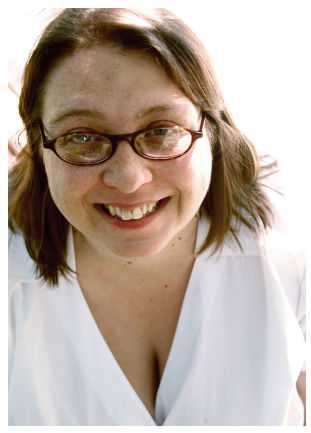
 

Erin Slaughter

Predatory Thinking

Trains are perfect vehicles for the act of murder, if you’ll excuse the pun. Agatha Christie knew that trick way back in the ‘30s, and it’s still true. They come and go, with people boarding and alighting at every stop. By the time the body is discovered, you can be on your way to the other side of the country. And especially on this island of the old Empire, people are so loathe to disturb a sleeper that they’ll leave them alone until the end of the line, and maybe not even then. Corpses ride around on the Tube for hours.

I remember a time, not too long ago, when I was sitting in a train carriage opposite a young white guy. He was only dressed in a thin yellow t-shirt and skinny stonewashed jeans despite the November chill, and looked around eighteen. His eyes were closed and his mouth ajar, but his chest did not rise or fall. Some people appear lifeless in slumber – I bet you’ve heard about people like that, or even sleep beside one of them every night, your fingers feeling for a pulse at four a.m. to make sure you’re not in bed with the wrong kind of stiff. Anyway, at Victoria everyone stood up to leave but yellow t-shirt didn’t wake. I tapped his ankle with the side of my shoe as I passed him on the way out, but he didn’t move. And he was still there when the train left on its reverse journey. So I just shrugged and carried on with my day. Not my handiwork, not my problem. That’s rule #1: don’t get involved.

My current target is Mr Henry Ragan. I know that he plans to catch the 19:00 from King’s Cross to Edinburgh for a midnight meeting with his mistress. He is scheduled to give the keynote speech at the ScotTech conference the next morning. My client doesn’t want Ragan to reach Edinburgh alive, so he won’t. After trailing him for a few days, I know his routine and its weak points. For example, he likes to run in Hyde Park at 5 a.m. every day except Sunday, when he has a lie-in before visiting his local Anglican to pray for his sins. It would have not been too difficult for a fellow runner, appearing to be in the grip of a painful cramp, to lure him into a fatal trap, but that was only a backup plan. I never can resist the opportunity for a train kill, the twisted exhibitionist in me loves the thought of ending a life in public, with dozens of potential witnesses just inches away.

Ragan’s a big deal in IT – some kind of search algorithm genius – but he’s not your stereotypical geek. He’s a stocky blond, like the current Bond, not bad-looking if you go for that type – I don’t. He has a strong right-hook from his weekly white-collar boxing matches, but I won’t give him the opportunity to use it.

I watch him as he waits for the platform announcement. His hair curls over the collar of his shirt like a boy on his first day at school. He turns his head as if he can feel my gaze on the back of his head. I look back down to my notebook, where I am still trying to finish a portrait in pencil from earlier this morning. The subject is the obese red-haired woman who sat opposite me as I drank my coffee. I retrace the fleshy folds under her chin but struggle to finish her face. I always find noses the hardest to draw.

Finally, the platform number is called and I follow him through the barriers. The train is a standard East Coast service, a yellow-faced snake of a train. Henry boards the third carriage, in the first class section. I approach him as he slides his trolley case into the luggage rack and feign a struggle with my own suitcase.

“Let me help you with that,” he says.

“That’s so kind of you,” I gush as he lifts the suitcase and places it beside his.

“It’s my great pleasure,” he says, “But what have you got in there, a dead body?”  He holds his back for a second as if injured, then moves his hands back to his hips. No, just a few bricks for a touch of realism.

“Do I look like a murderer to you?” I ask, while mirroring his hands-on-hips position. A handy short cut to establish rapport with the target. I giggle, pout, and then shake my glossy locks at him. Both his wife and mistress are slim, horsey brunettes, so I’ve mimicked that look.

“Perhaps you’re an international assassin, sent to kill 007,” he says in a Sean Connery accent. I chortle, still in character, and then squeeze past him to my seat. I feel his gaze on my bum as I walk away, but I don’t look back.


They call me the “Black Chameleon”, those who hire me or simply know of me. Though in reality, chameleons turn black when they’re enraged, stressed or dead, and I try to avoid each of those situations as much as I can.

My family emblem is a jewelled chameleon in a rainforest shade, tongue outstretched to catch her prey. I wear it on a pendant hanging from a leather chain around my neck. Chameleons are fascinating creatures, smart yet emotional. I often prefer their company to humans, who are often emotional but not so smart. My family has dozens of the lizards in our garden at home. Not as pets, but as welcome visitors. They often don’t like being handled, but it is enough to stay close and watch the creature watching me. Its colour changing as it stops fearing me.

To hire me you have to post a fake advert in the “Rush Hour Crush” column of the Metro newspaper. You know the kind of thing:

To the stunning blonde

reading Harry Potter at

Stockwell on the Northern

line, 8am on Wednesday.

You’ve already put a spell

on me.

Muggle in the Red Hoodie

Is it wrong to use this forum for murder? I think not, as the column itself is sleazy, just a public outpouring of belated lust. Most of those lonely hearts will be married folk, who only wish they could call on someone like me to fix their situation.

There are certain details that must be included in the advert to draw my notice. I could tell you more, but I’m not touting for new business here, and a girl must be careful. That’s rule #2, if you’re counting. I bet you won’t read the Metro in the same way again now, will you? But you won’t be able to figure out which ads are for me – my system is too good.

My clients are usually rival CEOs, greedy business partners and the occasional mafia upstart. Not the nicest of people, I admit, but the work pays well and I’m very good at it. You could even say that I’m uniquely qualified for this position, as you’ll discover later.

I perform my usual scan of my surroundings. Being more spacious than the standard carriages, first class makes my job easier. I find my seat quickly but pass it in order to take an inventory of the nearby seats. I check the seat reservation cards above each seat – a few are going all the way to Edinburgh, but several will alight at York, the train’s first stop, in just under two hours.  Plenty of time to complete the job and leave.  That’s my third rule: don’t dally once it’s done. It shouldn’t need to be said, but there is a part of me that wants to stay and witness the discovery of the body, hear the screams and inhale the panic of that moment. But then, there’s always a chance of being questioned by police, which is not worth the fun of sticking around. I can fool the average person, but police officers are trained to sense those who don’t belong, in spite of initial impressions.

By now you’re probably wondering about the train’s CCTV. Aren’t I worried about being caught on camera? No, because I use the same technique as a chameleon hiding from a snake in the red grass. The snake slithers past but doesn’t see its silent, still prey mere inches away amidst all the spears of red.

My seat is in a row of rear-facing singles beside the window, whilst Henry has booked a pair of seats on the other side of the carriage facing the opposite direction. He leaves his laptop case on the window seat and sits by the aisle. I return to my seat, take out a book and pretend not to see him, kicking off my heels and crossing my legs as he watches.

“Well, hello again,” he says. “It’s like fate herself is conspiring to put us together.” I nod, then open my book to the first page.

Predatory Thinking,” he reads out my book’s title. “Good choice, are you in advertising?”

“No, I’m starting up a search optimisation company, but there’s a lot of competition out there.”

“Naughty fate strikes again.” He laughs. “I’ve got some experience in that field. Join me and we could chat about your ideas.”

“Isn’t that seat reserved for someone?” I ask, raising an eyebrow.

“Just for me. I always book two seats on the train so I don’t get disturbed.”

“`I see.”

“So, why don’t you come and sit with me?”

“Well,” I draw out the moment, slipping the tip of my tongue just past my lips. “I wouldn’t want to disturb you.”

“Angel, you’ve done that already. You might as well finish the job.” The train’s motion jolts us both as it speeds out of the station.


After giving some useful tips on my fictional start-up, Henry becomes predictably hands on. He’s keen to get me into the loos for a “private conversation”. It’s almost too easy.

“You really turn me on,” he whispers in my ear, his palm skimming the top of my thighs. I gently slide his hand back down to my knee.

“I can’t do this,” I say. “I have a boyfriend.”

“I have a wife,” he says. “What they don’t know won’t hurt them, or us.”

An elderly woman in the row behind us is tuned into our exchange, watching our reflection in the window. I decide to wait until she goes to the toilet and endure his company for a few moments longer. One body can be explained as natural causes, two bodies attract attention. That’s not an official rule, by the way, just a general principle. It doesn’t take long – thank heaven for the drinks trolley – before she rises from her seat and makes her way towards the vacant toilet. I watch her progress through the swaying carriage, the delicate balancing on arthritic knees and the strain of each step on her swollen ankles. I imagine myself making those movements.

A ticket inspector reaches the start of the carriage and begins to check tickets. His navy uniform hangs off his gaunt figure. He’s youngish, about twenty-five. Muddy-brown hair slips out from under his cap.

“What are you looking at, Angel?”

“Nothing really.” I turn back to Henry and smile. “The inspector’s coming, that’s all.”

The inspector reaches us within a couple of minutes. He studies our tickets more than our faces, and barely looks at Henry. I begin to relax, until I remember rule #4, which is also Murphy’s Law.

“Does this train go close to Gretna Green?” Henry asks the man, with a grin.

“Nowhere near, Sir,” he replies. “You’d have to get off at Newcastle then a couple more hours on one of the Northern trains.”

“That’s a shame,” says Henry. “I’ve just met this girl, but I think I’d like to run away with her, like in the olden days.” The inspector gives him a sideward glance.

“Plenty of chapels in Edinburgh, Sir.” He tips his hat to us and before moving away. Damn, now he’ll remember us. That Ragan was not alone before his death. I will have to change my appearance before I leave the train.

“Why did you do that, Henry?”

“How did you know my name was Henry?” he asks. “I told you I was Harry.”

“Oops.” I giggle. “But how could I not recognise Wired’s Man of the Year?”

“Damn that magazine.” He strokes my cheek. “I thought it would be more romantic to pretend.”

“But you didn’t stray far from your real self,” I say.

“I can’t act,” he says. “Never could. I’ve never wanted to be anyone else. The world is full of psychos, pretending to be what they’re not. It’s all bollocks.” Finally fed up of his company and mindful of the old lady’s imminent return, I decide to act.

“To new beginnings,” I raise my cup of orange juice and nod to his drink. We knock our cups together then pour them down our throats. I watch him swallow the poison before I jab my pencil end into the side of his neck to paralyse him temporarily. It would only take a moment. I feel him shudder against me. He tries to curl his fingers into a fist, to fight it and me, but the opponent within him has already begun its work. “Shh, it’s all going to be okay, Henry.” He tries to speak but only drools on my chest. I wipe his mouth. “Carol sends her love, by the way. Isn’t that nice of her?”

It doesn’t take long for his body to give in. My people have used the seeds of the Tangena tree for hundreds of years, for murder, suicide and executions. Accused criminals were tested through the Tangena trial by kings and queens, and their innocence or guilt decided by its outcome. Ragan is not the first person that I’ve found guilty through this method – my targets are always guilty of something. Although an ancient method, it’s a perfect murder weapon as the victim only appears to have suffered a massive heart attack and the poison is virtually undetectable after death.

I gently untangle him from my embrace and wrap his coat around him. His head droops a little. I text Carol on Henry’s iPhone. Our agreed signal is simply a phrase that his wife has wanted to hear him say for years, “Love you.”  Then I wipe my fingerprints away with my sleeve, stand up and walk away.

I pass the old lady on her way back to her seat. We avoid each other’s gaze. She would be getting off in York in a few minutes, so shouldn’t become too concerned about her sleeping neighbour and his missing companion. I pretend to turn left towards the toilet as the carriage door slides shut behind me. Then I collect my trolley from the rack and carry on through the train until I reach the final carriage.

I can barely fit the trolley into the tiny toilet. The train does a fast switch onto a new line and I put my hand out to avoid slamming my head into the hand dryer. I keep my hand there and look at myself in the mirror: the green eyes, slim nose, wide mouth, the low-cut top, skinny jeans and high-heeled feet. What now? Who now? My blood pulse starts to race, so I breathe deeply and concentrate. I scrape the pad of my index finger across the blade of my teeth, then swipe the fresh ichor on the chameleon pendant, staining its green surface a deep rust.

I always start at the top. The glossy mane and fringe shrink into short wiry curls. The dimples disappear and the chin rounds. The hairline retreats from the face, showing more of the forehead. Green irises turn brown, the new shade spreading outwards from the pupil. I recall a button nose from my sketchbook, reproduce it and the face is nearly complete. A scattering of wrinkles ages the face to the mid-sixties. At the same time, the body fills out and ages appropriately, the flat stomach rounding, the breasts drooping. I swap the clothes to a navy blue skirt suit and flat shoes. Then I adjust the colouring, darkening the skin to a deep mahogany in an instant. I contract the trolley case into its original doll-sized form and pop it back into my handbag, which I’ve also transformed to match my new mature persona. I admire this new form for a moment, and practice the old woman’s pained walk.  Then I say a quick prayer of thanks to the gods of change, before emerging from the toilet.

“Ticket, please,” says the inspector, standing outside. I almost strike him. He steps back and frowns as if he can sense the concealed threat from this harmless-looking woman. I hand him my stamped ticket. “I must have seen you before, sorry,” he says, smacking his temple lightly, before shuffling back into the carriage.

The loudspeaker erupts, with an ascending series of beeps. “The train is now approaching York,” says a cheerful female voice. “York will be our next station stop. Please ensure you have all your personal belongings if alighting at York. Thank you.”

The train slows to a halt at York. I leave the train and watch as the elderly woman meets a younger version of herself just beyond the ticket barriers. Then I follow the signs to the London-bound platform and buy a coffee at the platform café.

I look at the advert from this morning’s Metro again. A job in Brussels. While I wait for the next train back to King’s Cross, I book a seat on the next Eurostar. Any excuse to practice my French. That’s not a rule, but it should be.


Penny Montague


Issue Tre Contributors

E. Kristen Anderson is the author of seven chapbooks including A GUIDE FOR THE PRACTICAL ABDUCTEE (Red Bird Chapbooks 2014) PRAY, PRAY, PRAY: Poems I wrote to Prince in the middle of the night (Porkbelly Press, 2015), 17 DAYS (ELJ Publications) ACOUSTIC BATTERY LIFE (ELJ 2016), FIRE IN THE SKY (Grey Book Press 2016), and SHE WITNESSES (dancing girl press, 2016). Her nonfiction anthology, DEAR TEEN ME, based on the popular website of the same name, was published in October of 2012 by Zest Books (distributed by Houghton Mifflin Harcourt) and her memoir in verse, THE SUMMER OF UNRAVELING, is forthcoming from ELJ. She’s currently a poetry editor for Found Poetry Review and also edits at Nonbinary Review and Lucky Bastard Press. She lives in Austin, TX and blogs at EKristinAnderson.com.

Prerna Bakshi is a Macao-based writer, scholar and translator of Indian origin. Her work has previously been published in over three dozen literary journals and magazines including Silver Birch Press, Wilderness House Literary Review, Peril Magazine: Asian-Australian Arts & Culture and Wordgathering: A Journal of Disability Poetry and Literature, among several others. Her full-length poetry collection, Burnt Rotis, With Love, is forthcoming from Les Éditions du Zaporogue (Denmark) later this year. She tweets at @bprerna.

Farah Ghafoor is a fifteen-year-old poet and a founding editor at Sugar Rascals. She believes that she deserves a cat and/or outrageously expensive perfumes, and can’t bring herself to spend pretty coins. Her work is published in places like alien mouth, Really System and Synaesthesia, and has been recognized by the Scholastic Art and Writing Awards. Find her online at fghafoor.tumblr.com.

Courtney Jameson is The Bowhunter of White Stag Publishing. Her chapbook “the unrequited <3<3 of red riding hood & her lycan lover” is forthcoming in 2016 from dancing girl press.

Katherine Nelson-Born lives in Pensacola where she writes and consults for K & K Manuscript Editing.  Her poems have appeared in the Birmingham Poetry Review, Ellipsis, Emerald Coast Review, Excelsior ReView, GSU Review, Longleaf Pine, Maple Leaf Ragand Penumbra among others.  Her poetry previously won the University of New Orleans Ellipsis award for poetry and placed twice among finalists in the Agnes Scott College Writer’s Festival, with a recent poem earning “Honorable Mention” at the 2015 Alabama Writers’ Conclave, http://alalit.com/.

Amy Meckler received her MFA in creative writing from Hunter College where she garnered the Academy of American Poets Award. Her poems have appeared in Atlanta Review, Rattapallax, Margie, Lyric, Brooklyn Review, Whiskey Island, Cider Press Review and Portland Review among other publications. Her first collection, What All the Sleeping Is For, won the 2002 Defined Providence Press Poetry Book Award and was published that year. Amy has also been nominated for a Pushcart Prize. She has taught poetry at Hunter College and currently works in New York City as a Sign Language interpreter.

Penny Montague writes fiction and poetry. She’s a Londoner who has just completed an MA in Literary Linguistics, during which she gatecrashed the Creative Writing classes and corralled her fellow students into creating an anthology. Her work has been published by Bunbury Magazine and Ink Pantry. She tweets at @pjmontague.

Sarah Frances Moran is a writer, editor, animal lover, videogamer, queer Latina. She thinks Chihuahuas should rule the world and prefers their company to people 90% of the time. Her work has most recently been published or is upcoming in The No Se Habla Espanol Anthology, Elephant Journal, Drunk Monkeys, Rust+Moth, Maudlin House, Blackheart Magazine, Red Fez and The Bitchin’ Kitsch. She is Editor/Founder of Yellow Chair Review. These days you can find her kayaking the Brazos in Waco, Texas with her partner. You may reach her at http://www.sarahfrancesmoran.comJulianne Neely

Sam Regal is a poet in Brooklyn. She is currently working toward her MFA at Hunter College.

Erin Slaughter holds a Bachelor’s of Arts in Creative Writing from the University of North Texas. After spending a year working as a publishing intern for a non-profit poetry press in the Pacific Northwest, she is currently an MFA candidate at Western Kentucky University. Her poetry, fiction, and creative nonfiction has previously been published in The Harpoon Review, The North Texas Review, Hemingway’s Playpen, The Yeah Write! Review, Emerge Literary Journal, and S/tick.

Elizabeth Theriot is a Louisiana-native and enthusiastic feminist. Recently graduated from the University of New Orleans with an English degree in tow, she is currently in her first year as an MFA candidate at the University of Alabama in Tuscaloosa. Elizabeth is also a mother to two small kittens, Simon and Mr. Darcy, and would like some lime with her whiskey, please. If you’re feeling brave, find her on Twitter at @elizavacious.

2015 PUSHCART NOMINEES

12311058_10206685452469591_5218890673285133057_n

We are ecstatic (and slightly exhausted from all the glitter tossing) to announce our nominations for the 2015 Pushcart Prize.  Due to the rules of the contest only work published in Alyss Issue Deux qualified for this year.  However, even that one issue gave us a great group of work to chose from and it wasn’t easy.  We’re extremely grateful to all the writers who support our little zine.

This year’s nominees are:

everytime I speak my gums bleed by Amber Atiya

America as a Room by Cassandra de Alba

Grundy County by Tammy Bendetti

Almost Someone Coming Home by Alexandra Smyth

Allen at 25 by Alyssa Yankwitt

Date-Rape by Natalie N. Caro

The Mayor : Merie Kirby

Merie Kirby

Merie Kirby lives in Grand Forks, ND and teaches at the University of North Dakota. She is the author of The Dog Runs On (Finishing Line Press, 2014) and The Thumbelina Poems (Red Bird Chapbooks, forthcoming 2015).  Her poems have been published in Willow Review, Midwest Poetry Review, Avocet, and other journals; she also writes operas and art songs in collaboration with composers.


Who is your favorite female identifying written character and why?

I have spent at least a week thinking about this. It is the hardest question in this interview! But I keep coming back to Jane Eyre – a book I first read when I was 14 because an aunt told me she wasn’t sure I was ready to read it. Which seems a very Jane thing to do, actually. And later I read it in school. And I’ve taught it several times now. What I like about Jane, what keeps me thinking about her, is that she is very contrarian (as she is accused of being) because she is very intent on being herself. All around her is a society that would very much prefer her to be otherwise, and she might waver, might try on something else, but ultimately she must be herself. Her inconvenient self.

What literary work by a female identifying writer had the most effect on you as a writer and/or person?

The poems of Emily Dickinson are one answer, but I think I have to give equal time to Charlotte Bronte’s Jane Eyre and Eve Curie’s biography of her mother, Marie Curie. I feel like each of these works taught me something about writing – about poetry, fiction, and memoir/biography – but also gave me models of women who followed the work or life they were passionate about.

How did your poem in Alyss come about?

The poem At six I wanted to marry Godzilla came about through that always curious mix of truth and fiction – I distinctly remember being, at around six, madly in love with Godzilla. Now, of course, that potential relationship is clearly problematic, but perhaps, I thought, there are ways that it might still be true. And, perhaps, sometimes I want to be able to be the hurt and angry monster and experience the safety net of another’s love.

What has been your greatest writing life moment so far?

Holding my first chapbook, The Dog Runs On, was a pretty great moment. Hearing my daughter read her favorite poem of mine to a friend was also pretty great. But I think the greatest moments of my writing life have actually been moments spent with poet-friends, writing together and enjoying hearing each other’s writing, and talking poetry with each other. Those are the moments that feed me.

What is your favorite piece by another writer from Issue Deux and why?

There are a lot of great pieces to choose from in Issue Deux! But I think Moth Queen by Ellie Slaughter, with it’s wonderful fairy tale imagery nestled up against very modern references is the piece that really caught at my imagination.

What are you currently working on?

Last September I participated in Tupelo Press’s 30/30 Project, writing a fresh poem a day and posting it. It was so much fun, and I could not believe that not only did I write a poem a day for 30 days, but I ended up with about 23 of them that I felt had a lot of potential. I went in hoping for maybe 10, so 23 is fabulous. I’m revising those 23 now, working towards another chapbook, or perhaps the kernel of a full-length manuscript.

Who/what is your favorite Alice/Alyss?

I think it has to be Alice who passed through the rabbit hole portal – I have always particularly loved her encounter with the pig baby and the pepper.

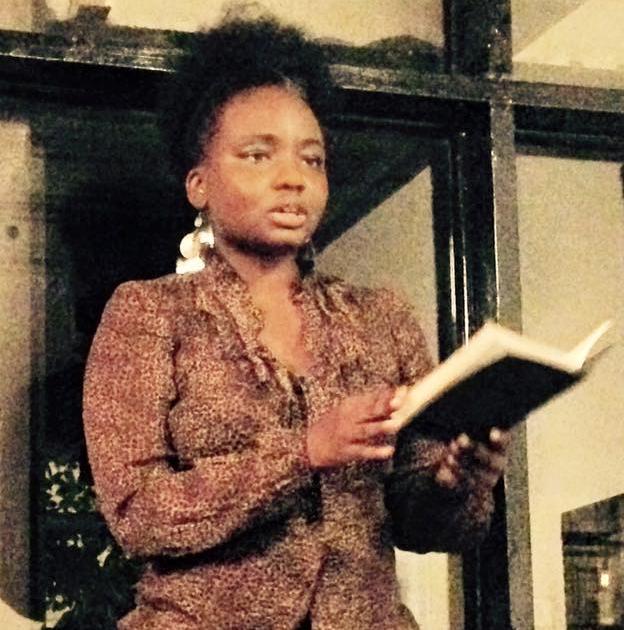
Brooklyn Afrekete : Amber Atiya

amz at open expresions sept 2015 crppd

Amber Atiya is the author of the chapbook the fierce bums of doo-wop (Argos Books, 2014). Her work has appeared in Black Renaissance Noire, Boston Review, the PEN Poetry Series, Nepantla: A Journal for Queer Poets of Color, and been featured on Poetry Foundation’s radio and podcast series PoetryNow. Her poems have been selected for the 2014 Best of the Net Anthology and nominated for Best New Poets. A proud native Brooklynite, She is a member of a women’s writing group celebrating 13 years and counting.


Who is your favorite female identifying written character and why?

I can’t say that I have one.

What literary work by a female identifying writer had the most effect on you as a writer and/or person?

I fell in love with the poet Chrystos when I read her poem “I Like a Woman Who Packs” in an anthology of Lesbian Love Poems.  Her Book Not Vanishing reaffirmed for me the importance of art-as-activism, as a mode of healing. The first time I heard June Jordan’s “A Poem About My Rights” was in a college writing workshop for women. To hear lines like “I know in my single and singular heart that I have been raped” and “I am not wrong/wrong is not my name/my name is my own my own my own,” that in your face, that unaffected and urgent, I thought I’d burst into flames. Some people might call this a perfect example of righteous indignation, and is it. My professor called it a rant, plain and simple, a term that I fully embrace.

How did your poem everytime i speak, my gums bleed come about?

I’ve been thinking a lot about how, although English is the only language that I speak, I come to it as a Black woman born in America who craves a language, a system of sounds, more compatible with my creative instinct, my voice and tongue and lips and teeth, which are unequivocally African. The conqueror’s language cannot fully capture the (out)rage, the grief and heartache I feel reading headlines, coming to the defense of Black youth who are verbally assaulted and harassed on the streets of New York (which has happened more times than I care to count), coming to my own defense when people try me because I’m Black/queer/female. I think about how my mothers’ tongues were snatched from them, how the ancestors don’t care about English grammar, and how in Black English, all we have is the present, is now. The ancestors are not the past, they are now.

I was invited to participate in a poem-a-day group during Ramadan this year and my preoccupation with all of that led to the piece published in Issue Deux.

What has been your greatest writing life moment so far?

I’m going to say the launch of my chapbook the fierce bums of doo-wop published last October by Argos Books. I put a lot of time and love and effort into this chap o’ mine–gutted half of the original manuscript, added new poems, and proceeded to revise. I had no idea what I was doing, was making it up as I went along. I think the final version of the chap is more woman-centered, less random, although there’s nothing wrong with that if it works. Argos created these lovely pocket-size works of art, hand-stitched. One poem is even a fold-out page, it’s so good. And I’m proud to say that, outside of the handful that I have left, they’ve sold out.

What is your favorite piece by another writer from Issue One and why?

I am fixated on black and brown bodies in America, how this country chews them up and spits them out, how my own consumption of death through television and social media has made me feel quite unstable (emotionally) at times. And yet if I didn’t tune in and log on, I wouldn’t know about Sandra Bland or Tamir Rice. I wouldn’t know about about the nefarious deeds of Monsanto, and the healthcare industry at large, the prison industrial complex at large, The ongoing plundering of African resources, the propaganda created by the west to demonize Islam and the Middle East.

Chrystos, who I’ve been thinking and writing about lately, insists that “poetry with politics is narcissistic and not useful to us.” All of this was going through my mind reading A Palestinian Elegy by Nazia Jannat. Also, I think it’s important for art to speak to the times, here, a lyric of mourning, a torture, “hysteria, the burning carousel,” the narrator asks “are we masochists?” We’re confronted with the consequences of terrorism, the determination of its handlers to destroy everything pure and good in this world, and don’t know what to do with ourselves: “…no time for sleep, no time for bread.”

And from Issue Deux?

If there’s such a thing as a perfect poem, then America as a Room would be it–not a false note to be found.

What are you currently working on?

I like to say that I’m working on a full-length. Perhaps I should simply say that I’m writing and put no pressure on the poems to make sense as a unit, though it does seem that that’s happening anyway. (Our obsessions are what they are.)

I hate paying for tampons and pads with wings. I hate walking out of a drugstore twelve dollars poorer every month because corporate thieves just HAVE to profit off of the shedding of my uterine lining…currently cooking up a visual poem that tackles this in some way. Also, I’d like to incorporate text into the sonogram photo of a fibroid. It simply has to be done.

Who/what is your favorite Alice/Alyss?

Off the top, I’d have to say the singer Alice Smith. Her music is rhythm & bluesy folk-funk-cabaret. Love her.

Translatress : Samantha Pious

sampious

Samantha Pious  is studying for a Ph.D. in Comparative Literature at the University of Pennsylvania. Her specialties are medieval French and English [courtly poetry and women’s writing]. Some of her pieces have appeared or are forthcoming in Mezzo Cammin, Lavender Reviewbroad!, Lunch Ticket, PMS (PoemMemoirStory) and other publications. Others are available on her blog at  samanthapious.wordpress.com.


Who is your favorite female identifying written character and why?

Consuelo, from the novels by George Sand, embodies everything I would like to be in life and writing. Reading La Comtesse de Rudolstadt (The Countess of Rudolstadt) was like coming home.

What  literary work by a female identifying writer had the most effect on you as a writer and/or person?

The “Ditié de Jehanne d’Arc,” by Christine de Pizan, inspired me to begin learning French, studying medieval literature, and translating poetry.

How did your work/works in Alyss come about?

Chaucer by Candlelight” is a response to the murders and other acts of violence which police have been committing against African-Americans and other people of color. A certain verse from Chaucer’s Canterbury Tales, “The blood out crieth on youre cursed dede” (Prioress’s Tale 578) kept echoing through my head during the weeks after I heard about the murder of Tamir Rice, who was twelve years old. To write about police brutality in my own voice (white and well-to-do) would have been deeply appropriative, and I’m concerned that even adapting Chaucer may be harmful in ways of which I’m not aware. The piece struggles to consider what the study of the humanities, in particular medieval literature, could possibly have to offer social justice movements such as Black Lives Matter. I’m coming to think more and more that the reverse proposition is true. Black Lives Matter has much more to offer Medieval Studies — not to mention the humanities in general — than medievalists could ever hope to give back. This may seem obvious to lay-people, but for academics it bears repeating: there’s more to life than our fields of study, and there’s so much more to our fields than the back-woods of western Europe.

What has been your greatest writing life moment so far?

In terms of writing as a practice or in terms of publications and acceptances? If the former, I’ve had some wonderful moments of looking at half-written drafts and realizing just how many directions the drafts could go before they become finished pieces. It’s a feeling of euphoria, of enormous power. If the latter, I’m always thrilled to see my name in print.

What is your favorite piece by another writer from Issue One and why?

The sound and the imagery of Meg Matich’s Cellar Violin leave me feeling sick, as they’re intended to.

And from Issue Deux?

If I had to choose, my favorite would be Cassandra de Alba’s poem America as a Room. The nineteenth-century home as a metonym for “America” (whether nation-state, geographic region, or culture) is deeply resonant for me.

What are you currently working on ?

I’m currently translating Christine de Pizan’s Cent Ballades d’Amant et de Dame into English as 100 Ballades: Lover & Lady. It’s a narrative sequence of lyric poems about a courtly love affair, alternating between the voices of a lady and her lover. Also, my translations from the French poetry of Renée Vivien are forthcoming from Headmistress Press. Renée Vivien (née Pauline Mary Tarn, 1877-1909) was a lesbian writer of the Belle Époque and one of the first modern European women writers to publish poetry for, by, and about lesbian women. Vivien’s work should be essential reading for anyone interested in lesbian “herstory.”

Who/what is your favorite Alice/Alyss?

Chaucer’s Wife of Bath, who names herself as “Alisoun” in her Prologue.


Marvel Comics is Doubling Down on Diversity

allnewmarvel

By Shanna Bowie

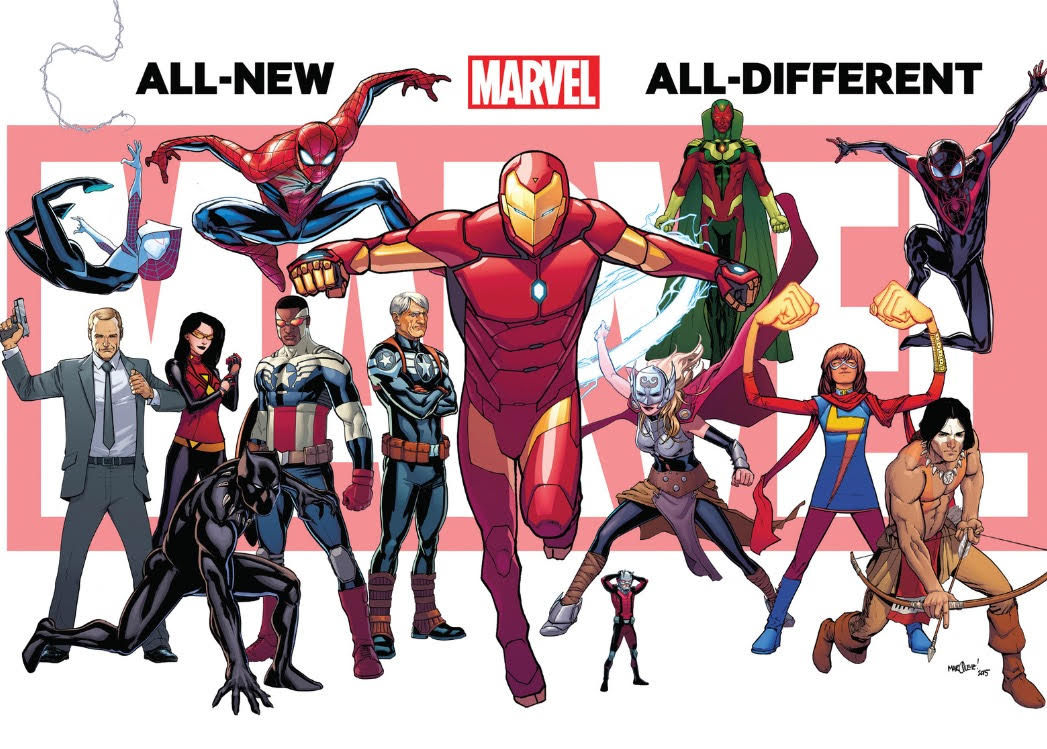
Even though I’m not above criticizing one of my favorite franchises for its shortcomings, I’m also not so petty that I won’t give credit where it’s due. Over the summer Marvel comics engaged in a complete overhaul of its universe with the Secret Wars story arc. The main storyline follows Dr. Doom, his allies and detractors as they try to figure out what happened after the collapse of the two Marvel universes. There have been a myriad of strong titles to come out of this event (believe me when I tell you that my wallet has suffered) and some of the highlights have been A-Force, an all-female Avengers team, Infinity Gauntlet, fronted by a young Black girl named Anwin Bakian and Secret Wars 2099, which features two women of color as Black Widow and Captain America.

And lest this seem like some sort of stunt, Marvel continues to double down on diversity with the announcement of their post-Secret Wars titles. In the All-New All-Different Marvel, there are more than 10 female lead titles, one of which features a pregnant superhero (I have no idea what’s going to happen but I’m excited). With the various superhero team-up titles, all of them prominently feature heroes of color like Miles Morales’ Spiderman and Monica Rambeau. Many of the popular female led titles such as Spider Gwen, Ms. Marvel and Thor are all continuing. As more announcements of new series continue to roll out, Marvel’s commitment to diversifying is evident. Recent announcements include November’s release of Moon Girl and Devil Dinosaur whose star is a precocious, bespectacled African-American little girl with afro-puffs and a pet dinosaur. Also Red Wolf, a Native American character coming out of the Secret Wars’ 1872 book will be getting a solo title in December.

Beyond gushing over what Marvel is doing, let’s talk about what this means. One of the two giants in the comic book industry is not saying that it is committed to diversity but rather diving head first into it. One thing I really give credit to Marvel for is embracing its history and radicalizing it. They are taking characters and racebending and genderbending them without ignoring the ramifications of it. One of the great things about the female Thor is that while she still kicks butt, the other characters openly discuss and address her gender. In the All-New Captain America, Sam Wilson has to defend his right as a Black man to be Captain America. It’s a subversive way to openly address the detractors who complain about Marvel opening up their universe to fully include women and people of color at the forefront. At this point, I’m kind of tithing to Marvel and I admit; I’m a fan. There’s lots of diversity in the smaller comic houses and I will always recommend them to first time buyers but having one of the majors take a running leap towards representing something beyond the standard superhero is affirming. Marvel recognizes that we are here and we want to see ourselves reflected back on the page. And that is empowering.

That Pig Over There

denise_mspiggy

By Shanna Bowie

 The Muppets new show on ABC has picked a winning marketing campaign to draw in viewers. Capitalizing on the popularity of shows like Real Housewives and Love and Hip Hop as well as social media’s apparent love of all things nostalgic, the Muppets have let two important details slip about their new “reality” show about the Muppets lives. At the beginning of the summer, we found out that Miss Piggy and Kermit had ended their decades long relationship. Then a few weeks ago, Kermit was “spotted” with a new lover, Denise, the pig. And the internet lost its mind.

In today’s social media landscape you need two things to succeed; drama and memes. This story has both. First, you have the end of marriage that most people in their 20s and 30s (those folks that advertisers love) associate with their childhoods. It’s like finding out your mom and dad are getting a divorce. Then you add dad’s new girlfriend into the mix. And let’s be real, dad’s new girlfriend is a younger, sleeker version of mom. The streets were hot and the memes were rolling!

It’s a great strategy because in today’s reality television landscape, this is what viewers eat up. We come to watch the Real Housewives of Whereever toss glasses of wine in each other’s faces and the D-list stars of Love & Hip Hop pull out each other’s weave, so in adding that element of personal drama, this show just went from a Muppet-style version of The Office to which pig is gonna get slapped first. It was also interesting to note that while most of these rivalries tend to see fans falling on either woman’s side, many fans denounced mild-mannered Kermit as a womanizer and Black Twitter called out his seeming preference for pigs over other frogs, jokingly likening it to Black men who only date White women. And although Denise has been set up as the stereotypical man-stealing golddigger (one gif shows her pointedly looking at the camera/Kermit and biting her pen), she’s nothing but polite and sweet on her Twitter (yes she has a Twitter account). ABC has created the perfect mash-up of controversy for what was originally seen as an innocuous reboot of the Muppets and the streets will be watching, if for nothing more than to see that TPOT get hers.


The Muppets premiered Sept 22nd on ABC.

Getting the Story Straight

Straight_NWA

By Shanna Bowie

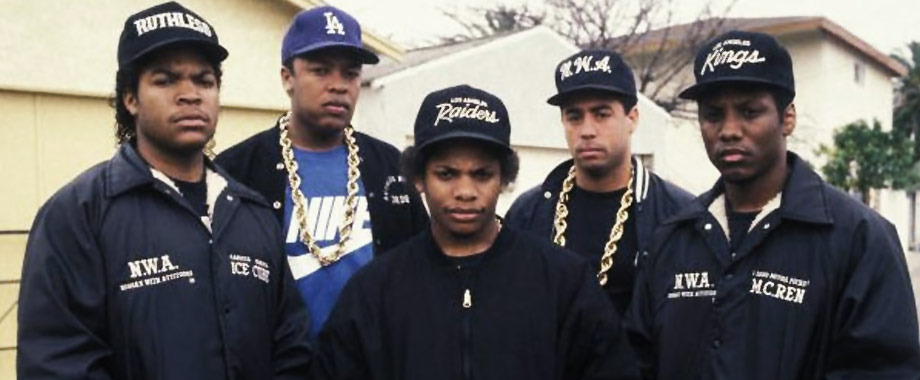
Straight Outta Compton is in theaters and it’s doing amazing. It’s the unexpected hit of the summer. The film, focused on the coming together and rise of the hip hop group N.W.A. (Niggas With Attitude) is receiving accolades for its box office numbers in a climate where minorities are often told our stories won’t win in theaters. And while it’s important to celebrate films like this for their accomplishments, the film also has its detractors, mainly the women who the film whom the film has strategically cut from the film; the women who were domestically abused by one of the groups founders Dr. Dre.  These women and their supporters have been vocal about the abuses of Dr. Dre so I won’t presume to speak over their voices. And Dr. Dre himself after pressure from these women, did apologize for his transgressions. But after seeing the film, what I was struck by was the opportunity Dr. Dre and Ice Cube had to talk about the connection between police brutality and hyper masculinity and how they let that go by in order to save face.

I love hip-hop. I grew up in Brooklyn, N.Y. during Biggie Smalls’ rise and tragic fall. I witnessed the Takeover and the Ether. And my mom probably taught me Rapper’s Delight in the womb. But that doesn’t mean hip-hop is what most black women would consider a safe space. Often hip hop can be a space where Black folks are working out their shit on a very public stage. What made groups like N.W.A. iconic was that they “kept it real” and told what was happening on their streets. The film does a good job in showing that in terms of how it related to over-policing in Los Angeles but sanitized the high-level of misogyny in their music. Much of that misogyny is borne out of the same place. The gangsta persona is a response to knowing you can be slammed onto the hood of a cop car on a whim. The smack my bitch façade is a response to being degraded in front of her. Where Straight Outta Compton failed black women was that in trying to hold up these men as idols, they erased how their very real shortcomings derived from the same place as their iconic music.

Too often women find that they are devalued, abused or erased in hip-hop but we still dance to the music, go up for the artists, and support this music and the men who perpetuate these ideals. We’re the women who don’t want to call the police on our abusive Black men because they’ve already spent their lives persecuted by authorities. But until we speak up about how these problems are interconnected they won’t be resolved. I know Compton was not meant to be a catch all for all of these issues but it was poised at a unique place to address them in an organic way and instead they chose to push a sanitized narrative, which is surprising for the men who once knew “nothin’ in life but to be legit”.