When Women Collaborate

feeling_myself

By Shanna Bowie

Last Saturday marked the anniversary of the release of Beyonce and Nicki Minaj’s first collaboration “Flawless (Remix)”. I remember the day that single dropped. It wasn’t quite the fanfare of Beyonce’s self-titled album but Twitter was still atwitter and the carefree Black girls were out en masse. We knew we were flawless and when the video of Beyonce and Nicki performing in Paris came out, the Beyhive and the Barbs lost it.

In the past few years we’ve seen some amazing female collaborations. Ava DuVernay directed a pivotal episode of Scandal which marked the first time a Black female director was directing a Black female lead in a show created by a Black woman. It was also the introduction of Khandi Alexander as Maya Pope, Olivia’s mom who is also a spy and terrorist. Jane Fonda and Lily Tomlin teamed up to executive produce Grace & Frankie, which has become a hit on Netflix and netted Tomlin an Emmy nomination for Best Lead Actress. They also stood together and called out unfair pay in Hollywood when they found out the male leads on the show were being paid more than them. The release of Rihanna’s “Bitch Better Have My Money” video caught a lot of flack for it’s use of violence, but few talked about the fact that Rihanna directed the video and that she tapped a virtually unknown visual artist named Sanam whose work she saw on Instagram. And this fall, the female showrunners of Agent Carter will make their comic debut writing the All-New Captain Marvel.

The fact is that when women collaborate, we get greatness but for some reason women are largely depicted as catty and competitive. And that’s not to say that it doesn’t exist. Not all women should or could hold hands and sing kumbaya but I want to celebrate the great female collaborations; the Feeling Myself’s and the Pretty Deadly’s and the A-Force’s. It could be that 20 years later we’ve truly reached the era of girl power the Spice Girls foretold.

In Defense of the Bitch

IMG_6158

by Shanna Bowie

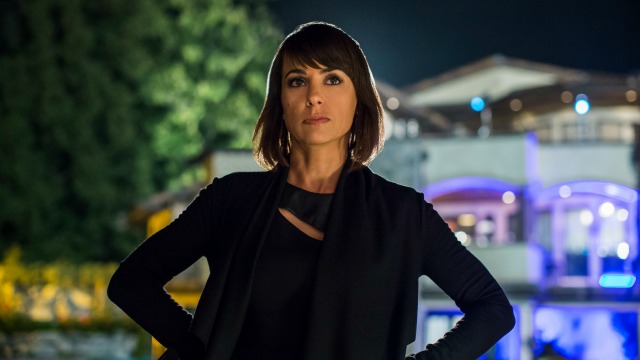
I just spent the day watching Lifetime’s UnReal, which is the amazing summer show no one is watching and all I have to say is “hooray for the bitches!” The first episode opens on Constance Zimmer’s Quinn, the show’s quintessential bitch. She is easily identified by her carefully coiffed bob and fitted blazer. Quinn is the manipulative executive producer of a Bachelor-style reality show that offers her producers cash bonuses for crying catfights, and 911 calls.  Her right hand girl is Rachel; a producer who excels at manipulating the contestants but unlike Quinn has a conscience. But throughout the course of the show, UnReal shows us that everyone can be a manipulative bitch and even the manipulative bitches have feelings.

We watch Quinn show her vulnerability as she strives to have a relationship and family and we see her lash out against other women when she doesn’t get those things. Rachel constantly struggles with doing her job, which she hates, to make money while talking about wanting to throw it all away and help African AIDS babies (yes, they say that and somehow it works). At one point, even the sympathetic on-set psychologist uses the women’s distress as a way to advocate for her own potential spin-off show. Obviously, each of the women contestants has an agenda for being there, while the producers try to maneuver them into “water cooler worthy” moments. And while the female characters perpetrate many of the machinations, the men also take their turns being manipulative bitches. After orchestrating a racially motivated blow up between two contestants, a black, gay producer is called an Uncle Tom and we see him question his own morality. The suitor of the show literally whores himself out to get investors for his development project. No one on this show is immune from the catty manipulations because we’ve created a society where getting ahead is the name of the game.

This is what makes UnReal so very real. If this show were mainly about men it wold be about the cutthroat, ruthless world of business but because the cast is mainly female, it’s about bitches. And I say embrace that. These are the kind of bitches I want to see on my screen because these are the kind of bitches that exist. Not just the childless, bob-haired, maneaters that Hollywood is so fond of giving us. These bitches have agendas or stumble into someone else’s. They are occasionally opportunistic and sometimes calculated. They want families. They want careers. They are women of color. They are not gendered. They cry. They MASTURBATE! (I actually put up praise hands when I saw Rachel and her vibrator going for the gold). UnReal has one more episode left to the season and I can’t wait to see where all these bitches end up.

Review of Harper Lee’s Go Set A Watchman

By Maggie Ferguson

For Christmas, 1956, Harper Lee’s closest friends in New York, a young couple, gift her with a fully-funded fellowship year (so jealous). She works on Go Set a Watchman, a novel that takes her back to the American South and to Maycomb, her fictional small-town microcosm of the South. As her main character, Jean Louise, compares the South in the 1950’s to the 1930’s South she was raised in, Jean Louise grows increasingly panicked at the pervasive racial prejudices amongst whites.

In Go Set a Watchman, the white populace of Maycomb, quintessential Southern town of the 1950’s, fears being overrun by N.A.A.C.P, by their black neighbors, and by the Federal Government. They feel they’re about to be attacked, and their preacher quotes Isaiah, 21:6, to warn them of an incoming assault:

“Go, set a watchman, let him declare what he seeth.”

Listening in church, Jean Louise re-appropriates the same language to cry out for a watchman to guide her through the justice and injustice plaguing the South. Jean Louise uses the same language for alarm to a different purpose. Her sense of right and wrong is in peril.

As Jean Louise wakes to how deeply-entrenched the social stratification rooted along racial lines is in Maycomb, her conscience marks the unfair and unjust, and she struggles with her repulsion. To the trained eye, the draft of Go Set a Watchman needs a rewrite. The novel feels cobbled together, and without any explanation, references old incidents as if assuming the reader already knows the backstory. The knowledge chiseled out in this novel, the same skeleton of characters and location, will informed Harper Lee’s draft of her next novel, To Kill a Mockingbird. Like Go Set a Watchman, To Kill a Mockingbird traces Jean Louise’s loss of innocence, only twenty years earlier—in the 1930’s. The novel showcases the trial of a wrongly-accused black man Tom Robinson and the system that unfairly convicts him. Jean Louise watches her father Atticus defend Tom, evaluates evidence of Tom’s innocence, and still sees Tom convicted.

Both Go Set a Watchman and To Kill a Mockingbird share the same concern over an individual’s conscience. Conscience is touted as independently determined by the individual rather than ruled by the majority. To Kill a Mockingbird’s climactic trial is designed to make the reader see injustice prevailing in the Southern climate. The novel puts a lot of faith in a reader’s ability to see what is right. The reader is trusted to think with Jean Louise, independently, and recognize racism. Since its publication, To Kill a Mockingbird has entered school curriculum to instruct young minds on how to recognize injustice.

Go Set a Watchman didn’t even make it to publication before the press reported Jean Louise’s father, Atticus, is a pro-segregationist. In fact, Jean Louise seems like the only white character in Go Set a Watchman who is a desegregationist. If Go Set a Watchman can be said to have a narrative arc, it is that of Jean Louise fully engaging her sense of right and wrong, her conscience, against the prevailing attitude supporting segregation. Her uncle Jack defines conscience as:

“Every man’s island, Jean Louise, every man’s watchman, is his conscience. There is no such thing as a collective conscience.”

Go Set a Watchman is a mess of scenes, but it does succeed in championing a well-developed conscience as a weapon against injustice.

The narrative that the human brain is capable of being the watchman Jean Louise craves has been around since the inception of anti-slavery in the United States. Writing in 1852, Ralph Waldo Emerson came to a similar conclusion: he must speak to his peers about the entrenched injustices they weren’t seeing:

“I have quite other slaves to free than those negroes, to wit, imprisoned spirits, imprisoned thoughts, far back in the brain of man,–far retired in the heaven of invention, and which, important to the republic of Man, have no watchman, or lover, or defender, but I.”

Emerson publically addressed anti-slavery by preaching the importance of self-reliance, of individualism, and of a man’s own conscience. He called upon men to make morally-right decisions, to think for themselves and not only of themselves.

Go Set a Watchman’s strength, like Emerson’s, lies in challenging others to have a conscience. This July, revisiting Daniel Patrick Moynihan’s 1965 “The Negro Family: The Case for National Action,” the Economist reports:

“Fifty years later . . . [if black America] were a separate country, it would have a worse life expectancy than Mexico, a worse homicide rate than Ivory Coast and a higher proportion of its citizens behind bars than anywhere on earth.”

“The wealth gap is much larger: the median white family in 2013 had net assets of $142,000; the median black family had a paltry $11,000.” (Source: The Economist, The fire and the fuel)

The language of Go Set a Watchman around race issues may be outdated, but as a challenge to recognize racial social stratification and desegregate, it stays relevant.


Maggie Ferguson lives and writes in Colorado where she is a long-time Lighthouse Writers Workshop member. Her fiction has appeared in Stone Crown’s Magazine and elsewhere. She’ll be attending Emerson College’s MFA program in the fall. 

(Wo)Man in the Machine

humans_gemmachan (1)

BY SHANNA BOWIE

Isn’t it strange, to create something that hates you? – Ava, Ex Machina

This summer artificial intelligence is on our screens in a big way. Ex Machina the directorial debut film from Alex Garland features a beautiful, humanoid robot Ava played by Alicia Vikander whose capacity for intelligence is being tested by a naïve programmer Caleb, at the behest of her megalomaniacal creator, Nathan. The film cleverly balances performances from Oscar Isaac as the creepy mastermind of the entire experiment and Alicia Vikander who as Ava tows the line between sympathetic and manipulative in her own right but overall the film asks two questions: 1. Is Ava capable of intelligence and feeling; and, 2. If she is, what right does anyone have to control her? When you add to the mix that Ava is designed as a female robot, Ava’s humanity and personal autonomy takes on deeper meaning. Ava finds herself, like so many of the failed experiments before her, beholden to her creator but also struggling to break free of him. She uses Caleb’s attraction to her to manipulate her way to freedom and by the end we see Ava’s full agency as she literally peels away the discarded pieces of her predecessors to form a new, whole human body before stepping into the light and starting her new life.

Visually, Garland gives the audience a lot to digest. The pieces of the other (all female) robots Nathan has built are all hidden away in closets like discarded marionettes. The dark, underground, claustrophobic environment Ava is kept in seen through the cracked glass she’s beaten again in an attempt to gain her freedom. Although Ex Machina is tightly scripted and visually arresting, it does fall somewhat short of explicitly addressing Nathan’s proclivity for female robots and how that interacts with his need for control over everything in his environment. The film leaves a lot to audience interpretation. It grasps at these concepts without fully realizing them. In contrast, Humans the newest summer series on AMC, takes these concepts and fully runs with them.

Humans is set in a not so distant future where intelligent humanoid robots called Synths have become a part of every day life. It focuses on Anita, a Synth who has consciousness and feeling until she is captured by Synth dealers and reprogrammed and sold to an unsuspecting family as their domestic. The series has just hit its halfway mark and so far Anita has dealt with the teenage son of the house trying to cop a feel from her as she recharged, and the father activating the “adult options” when he becomes fed up with his wife’s secretive behavior. Beyond Anita there’s Niska, another fully sentient Synth who is forced to work in a brothel. Niska snaps when a customer asks her to acts like a little girl and simulate rape. We also see that while some Synths are seen as no more than computers or toasters, they are still harassed and even beaten by humans. The show continues to ask (and answer) the questions that Ex Machina poses. Through Anita, Niska and other Synths, we see humans acting out some of the worse parts of themselves because this society has allowed them to do so by creating a class of “people” that aren’t human. It’s telling that the violence that is acted on female Synths is still largely sexualized and Niska drives home this point to the brothel madam when she tells her “everything [the men] do to us, they want to do to you”. With many parallels to both gender and race, Humans is tackling what it means to live on both sides of a society where people have the freedom to treat another group of people as lesser than without impunity. Aptly, there is one character who is seen as a zealot by his peers because he recognizes the danger of the position humans have cornered themselves into by creating and abusing the very beings they’ve let into their lives. Niska represents that vengeful spirit fighting for control of her own body in a society she doesn’t trust while Anita is caught between her programming that moves her to help the family she works for while still rebelling in the small ways she can against them.

Similar to the dystopian future phenomena in YA literature, this exploration of artificial intelligence as framed through the lens of female bodies becomes a larger allegory for what women today are fighting for. We are pushing back against a society that tries to force us to nurture its desires at the expense of being our full, sentient selves. Furthermore, these stories shine a stark light on a society that defines its humanity by how well it is able to control those it considers to be lesser.

Go Ahead and Take Care of Yourself

treat yo self
BY CHRISLANDE DORCILUS

One of my dearest friends, Audre, is on her way to being a wonderful behavioral therapist. She’s getting her Masters degree in the subject and is burning her way through the coursework with her brilliant and empathetic insight . She knows about human behavior, she knows what makes us tick, she’s in the business of pointing out my emotional biases and blind spots.

She, like the rest of us, also has a hard time taking care of her own emotional and physical needs. Her and I often have conversations about our issues with anxiety. Our jobs, partners, educations, and future hang like anvils around our necks.

When it’s your job to make sure people make it through life’s most difficult turmoils like partner violence and sexual abuse, there is a  great responsibility to not fuck it up. Even those of us whose job is  to heal others, and are very good at it, still find it hard to fulfill our needs. We forget what Audre says:  “Caring for myself is not self-indulgence, it is self-preservation, and that is an act of political warfare.” We forget to take her advice.

I am an annoying know-it-all who finds my own brand of cheery emotional austerity the best way to live life, but the truth is that this austerity has made it difficult to connect with my own needs, and time again I fail to to take care of things that are important to me. I sweep a lot under the huge silent rug of depression. I find myself overwhelmed with the fact that both politically and emotionally it appears that I have no power, even over my own body–as we women are living in a society that both ignores us and finds our labor disposable.

I forget to take care of myself.

Self-care–it’s all the rage! But what exactly is it? According to some internet digging, self-care is a term used in reference to when people (usually patients in rehab or in hospitals) take initiative to heal themselves. I am inclined to give Dorothea Orem the credit as the originator of the term as it applies to healing practice. She developed the “Self-Care Theory” to help nurses do a better job at connecting with their needs and the needs of their patients. Some of the major assumptions of her theory according to currentnursing.com boil down to this:

  • People should be self-reliant and responsible for their own care and others in their family needing care
  • People are distinct individuals
  • Nursing [caring for others] is a form of action – interaction between two or more persons
  • Successfully meeting universal and development self-care requisites is an important component of primary care prevention and ill health
  • A person’s knowledge of potential health problems is necessary for promoting self-care behaviors
  • Self care and dependent care are behaviors learned within a socio-cultural context

Orem’s theory is a perfect place to start in recognizing what we need to do in taking care of ourselves. We need to take responsibility for our own well being, which honestly, is a big feat unto itself. I can’t even remember to drink enough water throughout the day, let alone to be self-reliant! But self-care is also self-learning so here are some things to remember:

Be Kind to Yourself

Let’s be real. Taking care of yourself is hard, hard, hard work. So you promised yourself that you would start exercising, or writing every day but you have yet to pick up a dumbbell or a pen. Now, you feel bad and you’re disappointed in yourself.  First of all writing is excruciating and difficult work –the emotional equivalent of ripping off your fingernails— and dumbbells are heavy–for no reason. When you find yourself feeling guilty about not meeting a goal and that guilt starts to develop into a cycle of anxiety, remember that it’s ok to feel bad! It’s ok to fail! It’s ok not to meet our own expectations! Remind yourself as to why you want to do these things in the first place. If they are to take care of yourself and bring you satisfaction, and if those goals are not serving your peace of mind and emotional health–revise and rewrite them.

Find Your People

Though a lot of research on self care practices center around Maslow’s Hierarchy of Needs, which states that your basic needs of  food, shelter, and clean water need to be met to feel subjective happiness, research by psychologist Edward Diener has proven that Maslow’s hypothesis is not necessarily true. Every group Diener researched and surveyed across the globe had different ideas of what happiness meant.  Yet everyone agreed that they were happier when they found support among their social groups and communities–even individualistic societies like our own. Part of being human is making and maintaining meaningful relationships, yet a lot of us live and participate in communities where meaningful relationships are hard to maintain. It’s corny, cliche, and a little sad but most people need people.  If you can, try to find your tribe. Find internet forums where you can get support, join meetup groups centered around your interests, join Facebook groups, church groups, stitch-n-bitch knitting groups, whatever hobbies and political goals that you may have, someone out there has them too! Find those people. Connect. Get the support you need to meet your needs.

Move

Science keeps telling us 30 minutes of moderate exercise a day will make you feel better, so I try to do at least five minutes a day! I figure it’ll add up. Seriously, move as much as YOU CAN according your abilities and desires.  Even if, like me, it’s to walk down to the dollar store to buy knickknacks or to twerk to Beyonce. Just a little dancin’ will make your day go a little better.

Honor All of Your Needs

What do YOU need? Think about it. Go ahead and make a list of what you need to feel happy. No matter how silly you think that need might look to other people, if you qualify it as a need: “something that a person must have : something that is needed in order to live or succeed or be happy,” then give yourself permission to at least try to meet those needs. Be gentle with yourself but be persistent. You want to wear pink everyday? Do it. Do you want to only share cat videos on your Facebook because the world is too horrible of a place? Do it. I believe in you!

Writing this post has made me feel like Oprah. You get self-care and YOU GET SELF-CARE!

Seriously, it’s important that we are kind to ourselves even more so as our political, economical, and social environments become more hostile. It’s also important that we find people that will also be kind to us. We all need our humanity reaffirmed to be able to meet our needs. We can do it!


Kelly Sue DeConnick “Got Woke” and More White Feminists Should Follow

BP_splash

BY SHANNA BOWIE

In a week where Serena Williams was called manly for winning her 21st Wimbledon championship and Amandla Stenberg was called a bully for pointing out Kylie Jenner’s cultural appropriation, it makes me wonder where are the White feminists when it the time comes to defend women of color and society’s double standards? The answer is: the majority of them do not care. This is why Kelly Sue DeConnick, writer of Pretty Deadly, Bitch Planet and Captain Marvel has become one of my personal icons. In a sea of white feminism, she’s an island of intersectionality.

We can’t go any further without talking about Bitch Planet. Bitch Planet is DeConnick’s latest project distributed through Image Comics, which tells the story of a dystopian future where non-compliant women are sent to a prison planet colloquially called Bitch Planet. From the first issue, DeConnick subverts the readers’ ideas of where this story is going. Initially, the story seems to be about Marian, a suburban housewife who clashes with her husband and is sent away for being non-compliant. But by the end of the issue, a different protagonist emerges, a strong, capable, naptural Black woman named Kam, who we are learning, has her own reasons for coming to Bitch Planet. Are you hooked yet?

That bait and switch in and of itself is masterful in a comics world where so much focus is placed on strong (white) female characters, but when you have a creator like DeConnick, she adds touches that ground this book in a deeper feminist praxis. Each issue ends with an essay penned by a feminist writer including popular women of color feminists like Danielle Henderson and Mikki Kendall. DeConnick is purposefully centering women of color but particularly Black women in this conversation about what it means to be a non-compliant woman in our society; what does it mean when the very body you’re born in is unacceptable by society’s standards? Coming from a woman that admits her early work was basically “Gloria Steinheim fan-fiction”, this is an important and deliberate act of defiance.

DeConnick is creating in a climate where women are navigating their various identities and as a white woman choosing to engage in a conversation about these intersecting oppressions she is the definition of non-compliant. She talks about her writing coming from a place that is “wildly uncomfortable and terribly terrifying” and how “that is the space you should occupy as an artist”. And by doing the real work of examining her own privilege she’s able to create work that comes from a deeper place and that’s why it resonates with people. It’s why despite having only four issues out, I’ve seen more non-compliant tattoos and patches and artwork than I have for many other fandoms (seriously, check out Tumblr, Twitter and Etsy). Kelly Sue DeConnick is at the forefront of ushering in a new wave of feminism that pushes white, middle class women to examine their privilege how it impacts their feminist ideas. I hope more people join her.

Model to Fashion World: “Stop Making Us Look Ratchet”

putnam flowersphoto from Putnam Flowers

BY CHRISLANDE DORCILUS


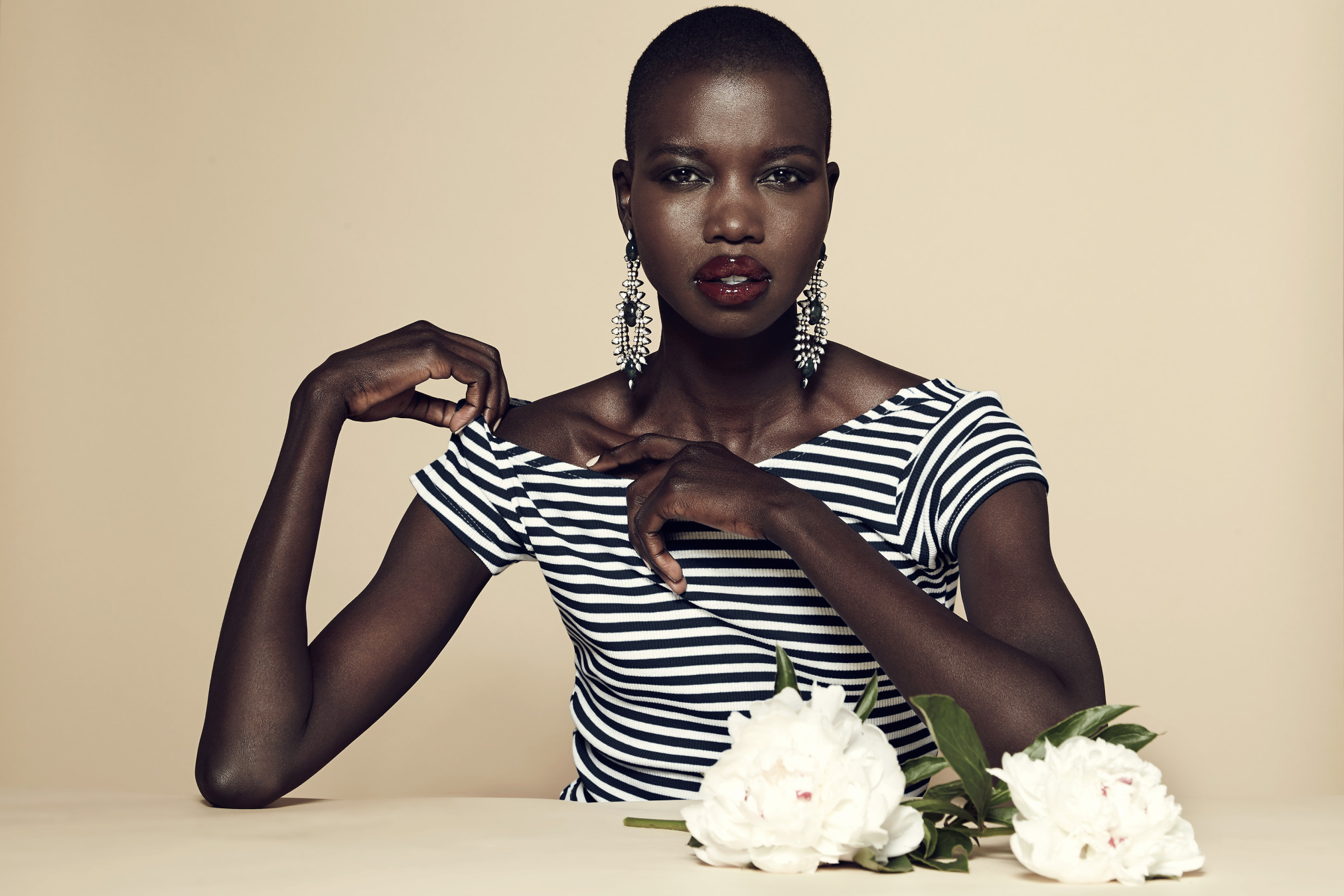
Nykhor Paul, a Congolese model and humanitarian, gave the fashion world a stern talking-to over the weekend. She shamed predominantly white fashion houses and makeup artists for one of the more micro-aggressive racist practices common behind the scenes of fashion: not having makeup or hair styling tools that fit black and brown models.

This isn’t the first time that a black model has spoken out about not being fully equipped or supported to do their job. Supermodel Jourdan Dunn has also tweeted comments about how untrained behind the scene staff at fashion shows seem to be when it comes to black skin and hair.

This incident has me dwelling on the nuanced ways that racism affects black women–specially at work. Let’s take modeling as the ultimate example of gendered and racialized labor: women are more likely to get fame and fortune doing it—one of the  few jobs where women can make more than men at all levels of their career. Modeling is also a predominantly white industry.

Nykhor, Jourdan, and other black models make up a very small portion of those being booked in the industry–about 6.8% according to Naomi Campbell. In 2013 this prompted former supermodel Bethann Hardison to pen three letters calling out designers by name for their lack of diversity. Season after season the number of black models has been dwindling. Many in the fashion industry had a hard time pinpointing the problem. The publicist blamed the designer who blamed the casting director who blamed the magazine editors and even still today the buck gets passed around so much that I can’t help but find Hardison’s letter very much relevant. She called it what it was and always will be, “a racist act.”

This form of racism, like all forms of racism, does not cease to function once integration happens. The models that have managed to make it past the policing reality of what it means to be both beautiful and black according to white supremacy, find themselves dealing with another issue: how to be as beautiful as their peers (essentially as good) without the same scaffolding of support available to them.

Imagine getting an office job where everyone had great assistants except for the black coworkers that got sidelined with the incoming interns every quarter. That would be ridiculous wouldn’t it? There’s the hardship of getting the modeling gig–as Nykhor points out black models are few in the fashion industry and then faced with more obstacles of maintaining a gig once booked.

Just as black women in other professional environments have experienced: whether we were ill equipped for specific tasks by an ignorant supervisor, or racist school system. It’s being told to wait for the group and finding that they’d already left–something that’s happened to be throughout my experiences as a black woman, worker, and scholar. The abandonment of both my needs and support by my non-black peers.  It’s all akin to the same feeling of having to represent a group, company, project that never believed in you in the first place. Nykhor cannot do the job of modeling without the art of makeup.  It’s not  fair to her to compete in an environment that is out to make her look “ratchet.” A model with makeup that doesn’t match her skin tone looks idiotic. The long arm of eurocentric beauty standards are accidentally making you look idiotic on purpose. It’s complicated.

Even to those of us that aren’t models and whom are feminist, makeup holds great currency. There are feminist pockets of the internet where talking about contouring and brow pencils is all the rage. Making the self is liberating. Making the self in images that make us feel confident and human is even more liberating. When your job is to represent what it means to be a woman and what it means to be human, finding out that you can’t because of a system that goes out of it’s way to erase your subjectivity and your human needs must be infinitely demoralizing.

At this point, it’s not the makeup companies per se. The higher end brands know that customers of all colors participate in societies impossibly blemish free beauty standards. Nykhor names them in her post – Mac, Makeup Forever, Iman Cosmetics, Covergirl,  Black Opal –  are all companies that cater to the diversity of black skin, all to varying degrees. Don’t applaud the make up industry yet: there are brands like Neutrogena, Physicians Formula, and Almay which, through their actions say, “Black women need not apply.” Racism is a complicated game of economics. And it’s even more in the world where we are told that those of us who are most successful are the ones that can sell a self. Rants like Nykhors ask us to think about how black women have to compete in the world of work and self composing. The quagmire of fighting beauty standards in a world where we can’t even have any.

Nykhor

Best Laid Plans: Black Women in the Marvel Cinematic Universe

marvel-140523

BY SHANNA BOWIE

Disclaimer: Since I was asked to write about pop culture from a feminist perspective, I want to make a few things clear. First, as a Black woman, my feminism stems from a place of intersectionality and centering Black women in discussions of feminism. If you’re looking for your hundredth “Why Doesn’t Black Widow Have A Solo Film?” article, you won’t find it here. Secondly, I am a professional fangirl. I don’t write about stuff I don’t like and if I critique something, it’s because I genuinely love it and I want it to be even better. I’m probably not going to call for a boycott of Doctor Who because Moffatt sucks (even though he does) but I will call something I love problematic if it is. In fact, that’s just what I’m about to do.


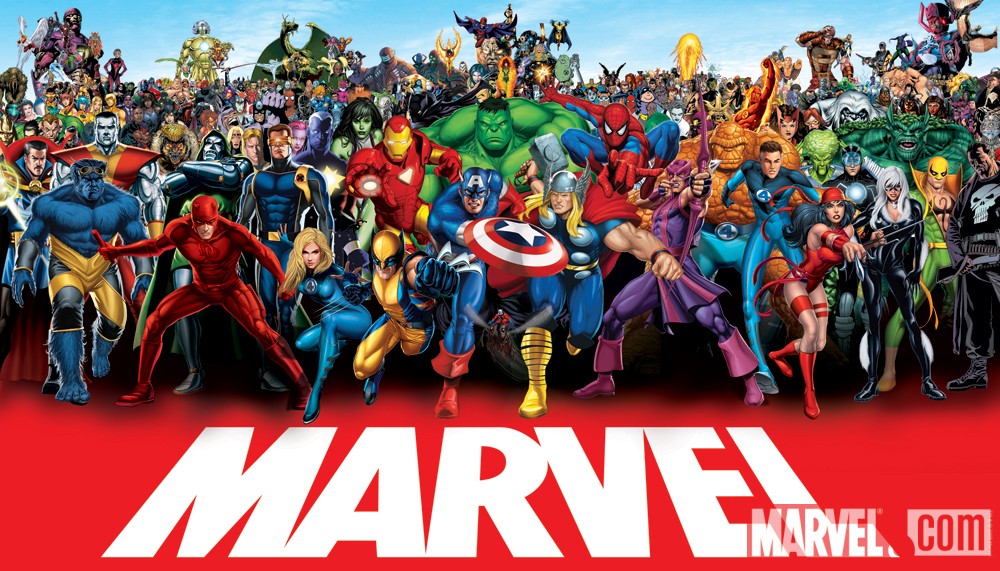
A recent back and forth on Facebook caused me to do some deeper thinking about representation in the Marvel Cinematic Universe. The MCU has been touted for its inclusion and diversity since it began. The MCU is based largely on the Marvel comics Ultimate universe reboot which started with the introduction of Miles Morales by Brian Michael Bendis. Subsequently, in 2008 the MCU started out with a concerted effort towards showcasing diversity and strong women. Samuel L. Jackson was cast as Nick Fury, whom the Ultimate’s artists had based their comic book version on. And Terrance Howard was featured as James Rhodes in the first Iron Man film.

Women were also given more prominent coverage like Pepper Potts, who was moved out of the mere love interest/sidekick role and molded into a businesswoman and equal partner for Tony Stark. As the MCU has grown, we’ve seen the addition of even more Black men; Idris Elba as Heimdall in Thor 1 & 2, Anthony Mackie as Falcon in Captain America: Winter Soldier, Avengers 2 and now the upcoming Ant-Man, and even a solo film for Black Panther slated to open in 2017. And women have been kicking ass and taking names all over the MCU; Agent Carter, Black Widow, Jane Foster, Lady Sif, more than half the cast of Agents of S.H.I.E.L.D. Marvel’s universe has expanded beyond anyone’s wildest imagination but this did not spring forth without careful planning and thought. So my question is: with all this thoughtful planning, did anyone think to include Black women in the MCU?

Just to note again, I am a huge fan of the MCU (read my disclaimer again before you call me a hater) but this is a real question. It seems like there was a real concerted effort to include Black people (read: Black men) and strong women (read: strong White women) into the MCU and basically, everyone thought they’d covered their bases. Pats on the back, golf claps, we did it! We solved the diversity issue in comic book films! And now it feels like if you call out this glaring oversight, here come the excuses. “We just got Black Panther, why can’t you be patient?” “But Warner Bros. has all the mutants and the only good sistas in the comics are mutants” “You guys got Zoe Saldana in Guardians. Isn’t that something?”

The answers to your questions are: “I’m tired of waiting” “Misty Knight and Monica Rambeau” and “Zoe was an alien not a Black woman”. I’m not even saying that Marvel needs to add a Black woman in a solo film to prove their commitment to diversity, what I’m saying is, has anyone examined the fact that this was a carefully laid plan that started pre-2008, spans 12 films, 3 television shows, is filled with Easter eggs and references to characters seen and unseen and none of Marvel’s Black women characters have been included even tangentially. I don’t think it’s malicious, I think it shows how we are not even included in the thought process. I don’t think some exec stood in a meeting and vetoed every Black female character that was pitched, I think we honestly never crossed their minds.

Now I can sit here and tell you anecdotes about all the Black women I know who frequent shops or Comixology or what have you to prove our buying power and why we should be included, but honestly, that’s not why we should be included. We should be included because the invisibility of Black women in the MCU mirrors the invisibility we feel in the real world every day. Just like the Black women who marched for Trayvon Martin, we criticized and pushed with Black men for Black Panther. Just like the Black women who burned their bras in solidarity, we lobbied for Black Widow to have a prominent role in Avengers. So when can we finally speak truth to power and acknowledge that we have been erased in this universe, both on-screen and off. When can we ask to be seen? Or can we admit, this plan wasn’t made for us.

The Mysoginoir of Burning Down Black Churches

four young girls
 by chrislande dorcilus

It is no coincidence that seven of the nine victims of Dylan Roof’s violent and racist attack on the Emanuel African Methodist Episcopal (AME) Church were black women.  Approximately 62% of black women in America consider themselves part of the Black Christian family. Every Sunday black women (even more so than black men) fill the pews of historically black churches–upholding a tradition as old as the American South itself; older even than the confederate flag.They congregate to worship, socialize, and do the much needed community outreach and political organizing that supports black American families. This group of devoted American congregants includes all three of my sisters, my devout grandmother, my best friend’s mother, and most of the women that make up the colorful patchwork of my life.

When I first moved to Brooklyn I lived with my aunt. Her apartment sat atop the church where she worshiped every Sunday. On Sundays she could be found catering meals for church events, or helping to manage the church’s budget, while taking expert care of the aging founder. My aunt is not a special case, black women around me cover and protect the black church from coast to coast. Though Brooklyn – the most diverse borough in the melting pot of NYC- is considered less likely to breed racial intolerance than a “Dixie State” like South Carolina,  I’ve seen MTA workers flying confederate colors. I’ve heard the whispers of racist ideology in the curt speech of women on the train. I can imagine the grief that has invaded the neighborhoods of the women I love as this wave of church burning engulfs them.

Dylan Roof wrote in his manifesto that the attack on Emmanuel AME was partly about rebuilding the purity of white women. Black women were once again paying for white purity with their lives–and this glaring gendered aspect of the crime washed over our nation. This is not to say that the lives of Rev. Clementa Pinkney and Tywanza Sanders matter less. This is not about pitting black men against black women. We need to admit to the truth of American life: black women’s lives matter less than everyone else’s. Take breast cancer for example, how is it that even though black women are less likely to develop it, we are more likely to die from it?  The simple answer is that the larger American community is not listening to our needs and not tuning in to our pain. As a black woman and a feminist, It’s painful to watch this “less than” rhetoric play out over and over again. I see the lives of the great women murdered at Emmanuel AME as my own. They stand as a mirror of who my friends and sisters could be.

Let’s remember Rev. Sharonda Singleton, a pastor, speech therapist, and high school girls’ track coach, and the woman who raised her teenage son to have compassion for her murderer. Let’s remember Rev. Depayne Middleton Doctor, the reverend and mother of four, who spent her time as a community director. These women were much more than the congregants of a megachurch. These women carved out niches of power for themselves and the women in their community within a historically misogynist faith, one where black female reverends still receive death threats.

It’s with bitter disdain that black feminists and womanists in America, such as myself, watch as black women are murdered for exercising the same religious liberty afforded to the racist conservative pundits and militarized groups that disseminate hate in American communities. It’s with mind numbing tears that we watch as feminist media channels ignore our deaths at the hands of white people. But what really drives the pain home is how much we are continuously being used. When liberal politicians need the black vote, they know where to find it and rouse the black church. Yet, they are very silent as those same churches are hollowed out with the fire of Bible Belt racism.

The destruction of black churches as overtly racist forms of terrorism and gendered violence has occurred throughout  America’s history. The truth is that any violent assault on the black church is a violent assault on more than half of our country’s black women. Jia Tolentino over at Jezebel points out that besides the 8 that are being whispered about in the news, “29 other black churches have burned within the last 18 months.”  We have yet to completely account for the countless others that were silently burned down in the years when commentary on the tragic state of race relations in America didn’t drive traffic to internet websites, news channels, and blogs. We know of white racists burning down churches and killing little girls, but we categorize those acts as dust left to settle in the past. America thrives on the silence which surrounds violence against black women. This silence is the same one that enables google to tag a young black girl as a gorrilla in an image, allows an Ohio police officer to break the jaw of a 12 year old black girl at a pool party, and perpetuates the most dangerous myth swirling in white America’s imagination: that black people feel less pain.

The truth is this: in 1963 four little girls were killed in the Birmingham church bombings, and 52 years later, in 2015, seven black women were murdered in a bible study group. Cynthia Hurd, the public librarian who was also killed at Emmanuel AME, was two years old in 1963. I can imagine her parents had cradled her in their arms, and thanked god for the blessing of having their own daughter safe in their home while vigilantly watching their television screens. I can see them  bravely breaching the collection plates of their own church to donate to the women that had lost their little girls to senseless white violence. I can only imagine.

In 2015, the death tolls aren’t decreasing. Misogynoir festers underneath the American psyche. Black women are routinely seen as violent by even other marginalized groups in our society. This makes it easy to denounce the mass violence that is enacted against us at both systematic and personal levels. Just as the death of Rekia Boyd, or the assault on Dymond Milborn, a twelve year old black girl who was beaten and kidnapped by police in front of her home, went unnoticed, so has the mass sterilizations, and the church burnings been ignored for what they are: violence against black women.